

Sustainability · 2025
In this section52 topics
- Sustainability Policy3 items
- Sustainability Goals & UN SDGs3 items
- Policy Review3 items
- Business Value Chain1 item
- Stakeholder Analysis1 item
- Environmental Policy & Guidelines4 items
- Environmental Policy Review1 item
- Energy — Plan & Guidelines3 items
- Energy — Electricity Consumption1 item
- Energy — Fuel Consumption1 item
- Energy — Targets2 items
- Energy — Performance & Outcomes1 item
- Water — Plan & Guidelines3 items
- Water — Withdrawal, Discharge & Consumption1 item
- Water — Targets1 item
- Water — Performance & Outcomes1 item
- Waste — Plan & Guidelines3 items
- Waste — Generation, Disposal & Recycling1 item
- Waste — Targets1 item
- Waste — Performance & Outcomes1 item
- GHG — Plan & Guidelines3 items
- GHG — Emissions1 item
- GHG — Emissions Verification1 item
- GHG — Principles & Standards1 item
- GHG — Targets1 item
- GHG Targets — Net Zero1 item
- GHG Targets — Other Targets1 item
- GHG — Performance & Outcomes2 items
- Environmental Legal Incidents1 item
- Social Sustainability — Overview1 item
- Social Policy & Guidelines6 items
- Social Policy Review1 item
- Human Rights Due Diligence1 item
- Employees — Plan & Guidelines4 items
- Employees — Workforce4 items
- Employees — Remuneration & Provident Fund2 items
- Employees — Training & Development2 items
- Employees — Occupational Health & Safety2 items
- Employees — Labour Relations1 item
- Employees — Employee Representation2 items
- Employees — Targets1 item
- Employees — Performance & Outcomes1 item
- Customers — Plan & Guidelines5 items
- Customers — Satisfaction Results2 items
- Customers — Targets1 item
- Customers — Performance & Outcomes1 item
- Community & Social — Overview1 item
- Community & Social — Plan & Guidelines5 items
- Community & Social — Targets1 item
- Community & Social — Performance & Outcomes2 items
- Other Social Management1 item
- Law Violation Incidents1 item
Sustainability Policy
Has a Sustainability Policy
Yes
Policy Description
With a strong commitment to operate and drive sustainable growth for the business, covering all 4 dimensions: economy, environment, society, and governance, to support its vision: “We strive to be the leader in providing comprehensive and sustainable engineering services that meet customer needs in developing the quality of life, society, and the environment.” This is integrated into every step of business operation, under the principles of corporate governance and code of conduct, while considering the impact on stakeholders as well as the value chain. Therefore, HARN has set its policy for sustainable organizational development based on two key business strategies: Business (B) and Sustainability (S) or B+S. This drives HARN’s sustainability efforts in each dimension, in alignment with long-term operational goals, and emphasizes readiness to address potential future crises. It also focuses on developing employees’ skill sets and integrating technology to improve work processes, enhancing the organization’s competitiveness for sustainable growth.
In 2025, the Company continues to emphasize sustainability-related issues in its business operations in order to reflect HARN’s sustainability practices across all dimensions, consistent with 2024. Such information has been disclosed on the Company’s website at www.harn.co.th and has also been communicated to management and employees throughout the organization.
Economic
Monitor the development of sustainable engineering technologies related to improving the quality of life, society, and the environment, and select high-quality products suitable for the market to offer as services.
Promote the use of digital technology to transform business operations, workflows, and services in order to improve work efficiency and enhance customer satisfaction.
Place importance on the values, wisdom, and ideas of employees and executives, providing opportunities for research and the development of new innovations and out-of-the-box ideas that meet the needs of customers, society, and the environment. Human resources are considered the most valuable asset of the organization and must be well taken care.
Emphasize the efficient use of human resources, optimizing workforce deployment through digital technology and automation systems as much as possible.
Environment
Develop a new holistic economic model, adhering to the principles of a 3-dimensional economy, which includes a bioeconomy system that focuses on the efficient use of biological resources, a circular economy system that considers the maximum reuse of materials, and a green economy system aimed at addressing pollution to reduce the environmental impact sustainably.
Address climate change by striving to find business solutions that reduce greenhouse gas emissions and even capture these gases to prevent their release into the atmosphere. Create awareness and set an example of a lifestyle among employees and executives, to become a culture that minimizes greenhouse gas emissions. Develop greenhouse gas-related businesses as new, challenging ventures for the organization.
Commit to carbon neutrality by 2040 and achieving net-zero greenhouse gas emissions by 2050. If possible, accelerate the process of achieving neutrality as quickly as possible, without delay, and use the knowledge gained to create new businesses.
Promote environmentally responsible operations by managing environmental quality and biodiversity according to relevant laws and regulations. Invest in, develop, and improve environmental management systems, while seeking new measures and methods to enhance management efficiency and better control environmental quality. Innovate and explore ways to reduce the use of resources and energy, as well as minimize the release of pollutants, waste, and greenhouse gases, to prevent, control, and reduce environmental, community, and social impacts as much as possible.
Social
Cultivate a volunteer culture to employees and executives by fostering a culture of “giving” to stakeholders and society without the expectation of receiving anything in return. Promote social and community responsibility by supporting public welfare activities for society and the environment, and encourage HARN employees to participate in social activities.
Respect the value and equality of individuals, honor differences, listen to opinions transparently, treat workers equally and fairly, assign tasks according to their abilities, and provide appropriate compensation. Prohibit the use of illegal labor, including employees and workers of partners and/or stakeholders. Safeguard and protect the safety of employees and HARN’s property without infringing on the rights and safety of others, including the protection of personal rights, confidentiality of information, data disclosure, and use of personal data. Treat employees of HARN and partners equally, considering human rights principles across the entire supply chain.
Create a positive work atmosphere and environment to ensure employee happiness and safety, and raise safety standards according to legal requirements. Set a work accident goal of “zero” and prohibit any operations without proper safety controls and safety equipment. Ensure appropriate and sufficient safety training related to the work.
Corporate Governance
Promote good corporate governance to ensure that HARN can create added value for both itself and society in a sustainable way, so that all parties follow the same practices in line with the 5 basic principles of good corporate governance: Integrity, Fairness, Transparency, Responsibility, and Accountability.
Promote and raise awareness of the importance of conducting business in strict adherence to laws, regulations, and guidelines relevant to business operations.
Conduct business in compliance with laws relating to anti-corruption, both domestically and internationally, where HARN operates its business.
Place importance on and engage stakeholders by being open to transparent and constructive feedback, treating everyone equally, and respecting differences.
Encourage fair competition.
Promote respect for property rights and avoid intellectual property infringement.
Protect personal data and safeguard online privacy with modern technology and robust security systems.
Security
Set a target to achieve zero work-related injuries and illnesses by developing, improving, and elevating occupational health and safety standards in accordance with legal requirements.
Prohibit any activities that do not comply with safety control measures, including the absence of safety equipment and insufficient or inappropriate safety training, as well as the active involvement in cultivating a safety culture within the community and society on a consistent basis.
Tax Policy
HARN aims to be an organization with sustainable growth, responsible for taxes, and compliant with accounting standards and tax guidelines, following the practices below:
Tax Structure: Avoid using fraudulent tax structures or those that are incorrect, or creating complexities for initial tax benefits and tax avoidance.
Tax Incentives: Strive to utilize tax incentives in a legal and effective manner, in line with sustainable and appropriate business decisions, within the framework of the country’s tax policies.
Tax Transparency: Report tax-related responsibilities to the government transparently, ensuring it is auditable.
Practice and Respect for Human Rights Policy
HARN is committed to conducting business in accordance with the law and human rights principles, emphasizing respect for the rights, freedoms, and equality of individuals as guaranteed and protected by both Thai law and international law. Management and employees are required to uphold human rights principles, adhere to the rule of law, respect human dignity, rights, and freedoms, and treat all parties equally, following these practices:
Promote and encourage the adherence to fundamental human rights principles and equality at all levels, regardless of nationality, race, skin color, gender, language, religion, political beliefs, or other beliefs, ethnicity, or social origin, property, birth, or any other status, which forms the basis of social coexistence.
Support and respect the protection of human rights by regularly monitoring and ensuring that its business does not contribute to human rights violations, such as not supporting forced labor, opposing child labor, or any other actions that demonstrate disrespect for human rights principles or do not meet international human rights standards, rights, freedoms, and equality.
Management and employees have the duty and responsibility to promote the rights of individuals wherever HARN or its subsidiaries operate, to ensuring that business activities do not involve or refrain from actions that violate human rights.
Information Disclosure
Disclose the policy for sustainable organizational development, sustainability operations, and performance results in all dimensions, in accordance with the criteria and regulations of relevant agencies, as well as the United Nations’ international standards, sufficiently, with transparency, and in a timely manner, to demonstrate the commitment and intention to develop the organization sustainably.
Disclose the policy for sustainable organizational development to directors, management, employees, and stakeholders so they are informed and adhere to it in their work and business operations of HARN.
Promote Moral, Ethical, Social, and Environmental Responsibility
Raise awareness and instill good consciousness, support participation in social and environmental responsibility activities for directors, management, and employees by ensuring comprehensive communication and providing training on ethics, integrity, corporate governance principles in operations and business conduct, as well as social and environmental responsibility that significantly contributes to sustainability, making it a regular part of the organization’s culture every year.
Practice and Follow-up Actions
The directors, executives, and employees at all levels have a responsibility to support, promote, and operate in accordance with sustainable organizational development policies, become an organizational culture, while considering balanced interests in economic, social, environmental, and corporate governance.
Policy Document Link
https://www.harn.co.th/th/corporate-governance/corporate-policy
Sustainability Goals & UN SDGs
Has Sustainability Goals
Yes
Goals Description
HARN sets sustainable development goals that consider the impact of business operations, reflecting trends in Environment, Social, and Governance (ESG) aspects, both in the short and long term that is appropriate, to achieving carbon neutrality by 2040 and net-zero greenhouse gas emissions by 2050. Working Group on Sustainability is tasked with driving strategies and guiding operations to align with the framework in order to achieve HARN’s sustainability goals and support the United Nations’ Sustainable Development Goals (SDGs) as follows:
Reduce electricity consumption by 30% by 2028 through the transition to renewable energy.
Control fuel energy consumption, reducing by 5% per year by transitioning 60% of company vehicles to electric cars within 3 years and 100% within 5 years.
Control the use of tap water, reducing by 3% per year through monitoring and managing water usage, and inspecting water-related equipment.
Reduce the amount of non-hazardous waste, hazardous waste, and air pollution from HARN operations by 5% per year by applying the 3R principle: Reduce, Reuse, Recycle.
Control the emission of greenhouse gases in Scope 1 and 2 by reducing by 5% per year, and reduce Scope 3 to net zero by 2050 through various projects and reducing the use of resources and energy that contribute to greenhouse gas emissions.
Source products that replace current products with environmentally friendly alternatives, aiming for 25% of revenue by 2040.
Support green projects or environmentally friendly initiatives, including renewable energy, at least once per year.
Organize environmental activities for the community and society at least once per year.
Provide environmental training for relevant employees and stakeholders in the value chain at least once per year.
Manage the environment in compliance with legal requirements and other relevant regulations, ensuring zero violations of environmental laws and regulations.
1. Key Sustainability Issues of the Long-Term Plan 2028
HARN analyzed sustainability development issues covering various business activities and stakeholder expectations as follows:
Key sustainable issues | Strategies | Drivers of success | Supporting Sustainable Goals | |
B (Business) | E Economics (Economics) | Smart & Lean | - Striving to the sustainable development of engineering systems to enhance the quality of life, society, and the environment. - Elevating digital technology to enhance operational efficiency and customer service, fostering impressive customer experiences. - Fostering competitiveness through intellectual capacity, preserving valuable personnel, and succession planning. - Conserving manpower and resources, establishing efficient partnerships. - Improving the efficiency of automated workflows. |
|
S (Sustainable) | E (Environment) | Go Green | - Developing an integrated economy, including the Bio Economy, Circular Economy and Green Economy - Aiming for Carbon Neutrality by the year 2040 and achieving Net Zero greenhouse gas emissions by the year 2050 |
|
S (Social) | Together | - Fostering a spirit of engaging in activities for the common good without seeking personal gain - Enhancing relationships and participation with partners. - Treating each other equally, showing respect for diversity, and embracing individual differences. |
| |
G (Governance) | Equality & Sufficiency | - Promoting good corporate governance to create sustainable value for oneself and society. - Encouraging moderation, rationality, and resilience under conditions of knowledge and ethics. |
| |

2. Key Sustainability Assessment Results
Risk impact and key business opportunities
Risk | Opportunities |
Environment (Inside – Out) - Waste of after-sales service - The use of energy resources - Greenhouse gas emissions | Economic (Inside – Out) - Using technology in the workflow - Product and Service Responsibility (Product and Service Development) Social - Safety of life and property - Human Capital Development - Health and Safety Environment - The use of energy resources - Greenhouse gas emissions |
Industry (Outside – In) - Product price competition Social - Changes in working methods - Contractors and workers (lack of installation knowledge, lack of skilled labor) Technological - Product and Service Technology Economic - Product price competition - Currency exchange rate Environment - Interest in environmentally friendly products Political - Geopolitical Conflict of Laws | Social (Outside – In) - Contractors and workers - (lack of installation knowledge, lack of skilled labor) Environment - Climate change, pollution - Interest in environmentally friendly products Political - Commercial Tax Law |
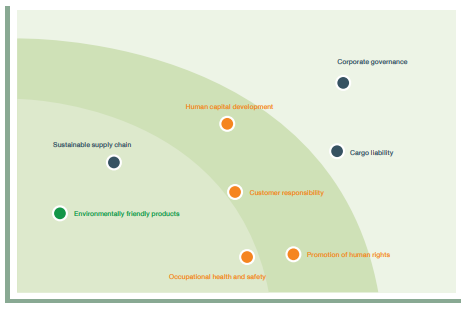
HARN prioritizes sustainable development issues as follows:
Economic and Governance
Sustainable supply chain
Cargo liability
Corporate governance
Social
Human capital development
Occupational health and safety
Promotion of human rights
Customer responsibility
Environment
Environmentally friendly products
3. Summary of Sustainable Development Performance in 2025
Action Items | Operational Results |
Corporate Governance and Business Ethics | - No Complaints Regarding Violations of Corporate Governance and Business Ethics Policies - No Complaints Regarding Corruption - No Complaints Regarding Human Rights Violations |
Customer | - Customer Complaints Resolution: 100% of customer complaints were resolved within an appropriate timeframe. - Customer Satisfaction Survey: The average customer satisfaction score for the year 2568 was 94.10%, a slight decrease of 0.04% compared to 2567, and 4.10% higher than the target of 90%. |
Personnel Development | - The average score for employee engagement and job satisfaction was 84.42%, an increase of 0.93% compared to 2567, which had an average score of 83.66%. - HARN implemented its employee development plan, achieving an average training of 23.32 hours per employee per year, surpassing the target of at least 6 hours per employee per year. |
Environmental | HARN emitted 209,431 tCO2e of greenhouse gases, which is below the target of 387,328 tCO2e, demonstrating effective emission reduction measures and progress toward environmental sustainability goals. |
UN Sustainable Development Goals
| SDG Goal |
|---|
| Goal 3 Good Health and Well-being |
| Goal 5 Gender Equality |
| Goal 6 Clean Water and Sanitation |
| Goal 8 Decent Work and Economic Growth |
| Goal 9 Industry, Innovation and Infrastructure |
| Goal 13 Climate Action |
| Goal 15 Life on Land |
| Goal 16 Peace, Justice and Strong Institutions |
| Goal 17 Partnerships for the Goals |
Policy Review
Policy Reviewed This Year
Yes
Policy Changed This Year
Yes
Review Details
In 2568, during the Board of Directors’ Meeting No. 2/2568 held on 24 March 2568, the Board reviewed the company’s Sustainability Development Policy. It was noted that there were no significant changes to the existing criteria, and therefore, the Board agreed to continue with the current sustainability policy. Regarding sustainability management targets, the Board continues to ensure that the company’s sustainability initiatives cover economic, environmental, social, and governance (ESG) aspects, addressing both short-term and long-term objectives appropriately.
In 2569, HARN will place a strong and concrete emphasis on social and environmental initiatives, such as the “Wanpha Project”, a research project for carbon sequestration assessment, aiming to achieve carbon neutrality by 2040 and net-zero greenhouse gas emissions by 2050. Furthermore, HARN is committed to supporting society, communities, and the environment in Thailand, ensuring that future generations can live in a safe and sustainable environment.
Business Value Chain
Value Chain Description
1) Business Value Chain
The directors, executives, and employees at all levels of HARN are responsible for supporting, promoting, and implementing work in alignment with the company’s sustainable development policy until it is fully integrated into the corporate culture. Operations are carried out with consideration for a balanced approach to economic, social, environmental, and corporate governance benefits. HARN identified stakeholders by analyzing their involvement along the supply chain, take the principle of universal human rights seriously, ranging from crude procurement, inventory, marketing and sales, distribution and customer service as shown in the diagram.
2) Stakeholder Analysis from the Business Value Chain
To ensure our mission to balance all groups of stakeholders equally. HARN analyzes and identifies key stakeholders across the entire value chain in the areas of economic, environmental, social, and corporate governance, with consideration for human rights principles. Emphasizing stakeholder engagement, both internal and external, HARN utilizes various communication channels to gather feedback, suggestions, and expectations from each stakeholder group. This process enables the company to establish appropriate action plans to effectively address these expectations.
Stakeholders | Engagement |
Employees and Executives | Individuals who drive the organization’s activities and are directly employed by the organization. |
Customers | Customers who purchase the organization’s products and services, both current and potential future customers. |
Business partners and/or creditors | Manufacturers and/or suppliers related to products and services, supporting the organization’s business operations. |
Competitors | Businesses operating in the same industry, which may not necessarily offer the same products or services. |
Shareholders | Shareholders and investors |
Government authorities and regulatory bodies | Authorities responsible for overseeing laws, regulations, and standards related to processes and products. |
Communities, society, and the environment | Those affected by the company’s operations |
Stakeholder Analysis
Stakeholder Analysis
| Stakeholder Type | Stakeholders | Stakeholder Expectations | Response to Expectations | Communication Activities |
|---|---|---|---|---|
| Internal stakeholders | 2921 · Description: Employees | • Treated equally fair, there is an opportunity to grow and progress
• It is safe and hygienic
• have remuneration and welfare suitable
| • Promote participation and two-way communication in organization
• Promote safety at work
• There are channels for complaints or suggestions
• Labor problems or complaints equal to 0%
• Salary and other benefits compare results with the labor market every year
- Central Division in Standard Sales
- Service Group Above average market
• No employee accidents from work 254 employees equal 0%
• The number of employees with the criteria metric is 100%
• Working satisfaction is 84.42%
| 2941 · Description: Online Communication · 2942 · Description: Internal Meeting · 2945 · Description: Complaint Reception · 2946 · Description: Employee Engagement Survey |
| External stakeholders | 2923 · Description: Customers | • Deliver goods and services in accordance with the agreement
• Employees have knowledge and understanding of products / services. Able to provide accurate helpful advice
• Obtaining on-time after-sales service
• Personal information security
| • Educate to customers
/Partners through the Knowledge Sharing Project and employee training
• There have been no customer lawsuits related to non-delivery of products or services, or breach of contract.
• Employees receive annual training on products and services.
• Customer satisfaction: 94.10%
| 2938 · Description: Visit · 2941 · Description: Online Communication · 2947 · Description: Satisfaction Survey · 2948 · Description: Training / Seminar |
| External stakeholders | 2894 · Description: Creditor · 2899 · Description: Suppliers | • Fair, follow the commercial terms
• Have been aware of the problem and how to fix it honestly. | • Communicate news and a complete, timely trading policy
• Visit and exchange information to improve collaboration
• Vender evaluation 2 a year
• 15 field/assessment visits
| 2938 · Description: Visit · 2941 · Description: Online Communication · 2947 · Description: Satisfaction Survey · 2948 · Description: Training / Seminar |
| External stakeholders | 2898 · Description: Competitors | • Competition freely on the legal framework | • Not any seeking competitors’ confidential information through dishonest
• No complaint of infringement of competitor’s property
| 2941 · Description: Online Communication |
| External stakeholders | 2913 · Description: Shareholders | • Sustainable business growth
• Continuously receive returns
• Business operations are transparent
| • Increase growth channels and expand business to new potential markets
• Have good corporate governance
• Developing full range of solutions and services
• Pay a dividend not less than 40%
• CG Score “Excellent” level
• ESG Rating Score “A” level
| 2938 · Description: Visit · 2941 · Description: Online Communication · 2944 · Description: Annual General Meeting (AGM) · 2949 · Other name: Opportunity Day · Description: Others |
| External stakeholders | 2931 · Description: Government agencies and Regulators | • Comply with all applicable laws, rules, regulations and regulations.
• Operate business responsibly and with transparency.
| • Review relevant laws, rules and regulations
• Repeat operation test regular
• There is no penalty for neglecting to comply with the law
| 2941 · Description: Online Communication · 2949 · Other name: Timely disclosure of information via the SET Link in compliance with legally prescribed deadlines. · Description: Others |
| External stakeholders | 2902 · Description: Community · 2928 · Description: Society | Conduct business operations with no adverse impact on the community and the environment. | • Promote natural resources protection activities/
campaigns and use resources wisely
• Utilize renewable energy through solar power generation panels.
| 2940 · Description: Social Event · 2941 · Description: Online Communication |
Environmental Policy & Guidelines
Has an Environmental Policy
Yes
Policy Description
HARN recognizes that its business operations have both direct and indirect environmental impacts on stakeholders throughout the value chain. Therefore, the company has established an environmental policy, which is publicly available on its website at www.harn.co.th. HARN is committed to driving and supporting initiatives that minimize environmental impact, ensuring business growth aligns with sustainable environmental management. Focuses on setting operational frameworks to ensure that its business activities consider the reduction of environmental and community impacts while also supporting climate change mitigation efforts.
HARN is dedicated to working with and encouraging stakeholders across the value chain, including partners, service providers, contractors, non-controlled businesses, joint venture partners, and customers to adopt the principles of its environmental policy through the following practices:
1) Continuously adhere to relevant environmental laws, standards, regulations, and agreements with customers, partners, or stakeholders within the value chain.
2) Define environmental objectives and targets to prevent and mitigate environmental impacts resulting from HARN’s activities, products, and services, while also promoting environmentally friendly products and services.
3) Reduce direct and indirect carbon dioxide emissions in operations, aiming for Carbon Neutrality by 2040 and Net Zero Emissions by 2050.
4) Enhance processes and products to minimize environmental impact while maintaining high-quality products and services. This includes ensuring compliance with customer requirements regarding restricted substances.
5) Optimize the use of energy, utilities, waste, and pollution control within operations including fuel, electricity, water, solid waste, hazardous waste, air pollution, and greenhouse gases to reduce environmental impact. Promote efficient use of limited resources based on the 3R principles is to reduce unnecessary consumption, reuse materials for maximum efficiency, recycle materials through reprocessing or transformation, including integrate Circular Economy principles to minimize waste generation.
6) Raising environmental awareness, provide education, and communicate the environmental policy to employees and all individuals working under HARN’s control. Including providing relevant environmental training programs to enhance knowledge and encourage environmentally responsible practices.
7) Strengthen relationships with society, government agencies, private organizations, and other related entities by continuously supporting and participating in activities for natural resource and environmental conservation.
8) Continuously improve operational methods and workplace environments to meet safety standards and protocols, reducing accidents and preventing occupational diseases that may arise from work activities, thereby minimizing risks to occupational health and safety.
9) Provide mechanisms for stakeholders across the value chain to share opinions and suggestions on environmental issues to drive continuous improvement in processes and foster sustainable coexistence.
10) Regularly monitor and review environmental policies, including management plans to adapt to the current situation.
HARN has established the Sustainability Working Group and Carbon Footprint Management Working Group, chaired by Mr. Thammanoon Tripetchr (CEO) and advised by Dr. Jain Charnnarong (directors), advisor to oversee all aspects of effective sustainability operations. In line with HARN’s sustainability goals for controlling organization’s greenhouse gas emissions, Scope 1, Scope 2 and Scope 3 are compliant. This includes establishing guidelines for resource management and control to ensure maximum efficiency, raising awareness, and providing education on environmental issues. Communication with the board of directors, executives, and employees is maintained to foster ongoing environmental responsibility, along with training and seminars for target employee groups and relevant working committees.
Additionally, the Building Management Department and the Occupational Health, Safety, and Environmental Department are responsible for overseeing resource utilization within the organization to ensure efficiency. They are required to report operational results in the monthly Sustainability Committee meetings for continuous improvement and optimization.
1. Climate Change Action
The current climate change crisis is becoming increasingly severe, with the affected areas expanding continuously. This issue has gained global attention, as reflected in the key discussions at the 29th United Nations Climate Change Conference (COP 29), which aims to limit global temperature rise to no more than 1.5 C above pre-industrial levels. The rising concentration of greenhouse gases directly impacts human life, biodiversity, and the environment, leading to more extreme weather conditions, seasonal fluctuations, and natural disasters.
Recognizing the urgency of this issue, HARN prioritizes reducing greenhouse gas emissions to mitigate global warming, implemented climate risk analysis and assessments, including risks such as flooding and regulatory changes in response to climate change that could affect business operations. In response, HARN has developed risk mitigation and adaptation to potential risks to achieve the committed to achieving carbon neutrality by 2040 and reaching net-zero greenhouse gas emissions by 2050
1.1 Greenhouse gas emission management from business operations
1) Energy Management
HARN remains committed to managing electricity and fuel consumption efficiently. The company aims to reduce electricity consumption by 30%or equivalent 6% per year by 2028 and decrease fuel consumption by 5% per year, compared to the 2024 baseline.
HARN there is a system for data collection of electricity to analyze and plan on electricity control, while promoting indirect energy savings, with the installation of 330 solar panels size of 127 kW and selected the PoE Lighting system to control the lighting system from the lights inside the building by using internet lines instead of electric wires. The system automatically dims the light from the lamp when there is enough sunlight from outside. Additionally, the building harnesses natural light to create brightness without introducing heat (Light Harvest). This can save electric energy and expenses, including the reduction of environmental impacts.
Also, HARN to learn and establish a building and energy management system by its internal team, together with Aiyaraharn Co., Ltd. (“Subsidiary”), which Internet of Things (IoT) know-how, we target for energy in architectural design no more 100kWh/m2/year, which is considered lower than in Bangkok office building.
HARN has currently installed 307 kW of solar power panels in the parking area. As a result, in 2568, the company was able to generate approximately 20,781.40 kWh of renewable energy, reducing reliance on conventional electricity.
The average electricity consumption of HARN’s office building was 56 kWh/m2/year, exceeding the design target by 40% and categorizing the building as a Zero Energy Building (ZEB) with 57 kWh/m2/year, indicating very low energy use per square meter. Additionally, HARN was awarded the DGNB (Green Building) Gold Certificate by the German-Thai Chamber of Commerce and DGNB GmbH in 2565, recognizing the building’s sustainable and energy-efficient design.
The chiller system, along with air handling and air conditioning equipment, accounts for 64% of total electricity consumption at HARN, while the energy used within the office building itself accounts for only 9%, which is lower than typical office lighting systems that consume around 25% of energy. To address this, HARN is committed to reducing energy usage by continuously optimizing and maintaining these systems for maximum efficiency. The initiatives implemented in the office building have fostered a corporate culture of energy awareness, ensuring that employees, regardless of their location, remain mindful of minimizing energy waste at all times.
To reduce emissions from fossil fuel consumption, HARN has set a target to convert 60% of its company vehicles to electric vehicles (EVs) within 3 years, and achieve 100% conversion within 5 years, compared to the baseline year of 2566. Vehicles will be gradually replaced as they reach the end of their service life to meet the goal of reducing fuel energy consumption by 5% per year relative to 2566. In 2568, HARN successfully replaced 8 company vehicles from conventional fuel-powered cars to electric vehicles.
Energy Management Performance
In 2568, HARN was able to reduce electricity consumption by 0.03% compared to the baseline year of 2567. In addition, fuel energy consumption also decreased, resulting from the conversion of 8 company vehicles to electric vehicles.
2) Water Resource Management
Water Management Target
As HARN’s operations focus on importing and distribution, there are no major operational processes that create significant water-related issues. However, HARN places great importance on efficient water resource management and has therefore set a target to reduce tap water consumption by 3% per year compared to the baseline year of 2566.
Water Resource Management Initiatives
HARN continuously promotes integrated water management, focusing on efficient water use and planning water consumption based on circular economy principles. Water management efficiency is improved by recycling water, such as using condensate water from the Air Handling Unit (AHU) of the air conditioning system for irrigation. This not only reduces water costs but also minimizes wastewater discharged into the environment. In addition, HARN regularly monitors and inspects water equipment and checks for any irregularities to prevent water loss. An automated irrigation system connected to a rainfall measurement system has also been installed, ensuring that irrigation does not occur when it rains, further enhancing water-saving efficiency.
Water Resource Management Performance
In 2568, HARN was able to reduce tap water consumption by 0.06% compared to the baseline year of 2567. This reduction resulted from promoting awareness and supporting responsible water use, as well as regular inspection and maintenance of water-related equipment.
3) Waste, Hazardous Materials, and Air Pollution Management
Management Targets
HARN applies circular economy principles to manage waste, hazardous materials, and air pollution, aiming to minimize waste generation. The company implements the 3R principles: Reduce: Minimize unnecessary use of materials, Reuse: Maximize utilization by reusing materials and Recycle: Recover materials for new use. Additionally, HARN develops practices to avoid environmentally harmful materials or chemicals, consider options before disposal, and restore used materials to value through refurbishment or transformation. HARN has therefore set the following targets: Reduce non-hazardous waste sent to landfills by 5% per year compared to the baseline year of 2567. Reduce hazardous waste, chemicals, and air pollutants generated from operations by 5% per year. Maintain zero complaints regarding pollution resulting from HARN’s operations.
Waste, Hazardous Materials, and Air Pollution Management Initiatives
HARN promotes employee awareness and knowledge of proper waste management, fosters a culture of energy conservation, and encourages employees to recognize environmental issues. The company implements a five-category waste segregation system, including: General waste, Food waste, Recyclable waste, Hazardous waste and Chemical waste. Chemical waste, such as used solvents and contaminated containers, is managed by licensed operators approved by the Department of Industrial Works, Ministry of Industry, ensuring traceable disposal. General waste, food waste, and hazardous waste are sent to landfills managed by government agencies, while recyclable materials—including plastic, paper, glass, and metal—are sent to private service providers for proper sorting and recycling.
In addition, HARN manages air pollution control from activities such as fire suppression agent refilling, 3D printing production, and printer demonstrations within office and warehouse facilities, following legal standards and regulations.
HARN also controls emissions from company vehicles and delivery trucks by:
Implementing an environmental policy that includes transitioning from conventional fuel vehicles to electric vehicles.
Regularly inspecting the condition of service provider vehicles to ensure compliance with standards and reduce emissions.
Installing air quality monitoring devices around the office building to track indoor and surrounding air quality.
Activities on Waste, Hazardous Materials, and Air Pollution Management
Waste Management by Category (3R Principles):
All activities under Reduce, Reuse, and Recycle (3R) for each waste category were successfully implemented at 100%.
Reduce | Reuse | Recycle |
1.Reduce paper usage by improving work processes through the development and implementation of digital systems. 2. Send documents electronically, such as via email. 3.Documents are stored in digital file format on a shared drive. 4. Hold meetings via conference systems or e-meeting platforms. 5. Conduct surveys using Google Forms. 6. Provide training materials via electronic channels in place of printed documents. | Reuse paper that has been printed on only one side. | Separate waste by type to add value through the sale of different categories of waste |
2. Waste separation.
Promote employees to separate waste into different categories in order to reduce the amount of residual and municipal solid waste. Proper waste segregation also helps reduce pollution, protect the environment, and preserve the planet. As a result of correct waste separation practices, the amount of waste sent to landfills has decreased, while the volume of recyclable waste has increased compared to the previous year.
3. Circular Project
Employees were encouraged to segregate plastic bags and plastic films for processing through mechanical recycling, whereby the materials are converted into recycled plastic pellets (Post-Consumer Recycled Resin: PCR). These recycled materials are subsequently reused as primary raw materials in the production process through the design and development of more sustainable products and packaging. This initiative contributes to the reduction of natural resource consumption and helps address plastic waste management challenges. In addition, the ‘Circular Project’ is an environmental initiative that also supports public welfare activities. Based on the established calculation, every kilogram of plastic bags and plastic films collected is assigned a value of five baht, which is allocated for donation to various charitable foundations.
Performance of Waste and Air Pollution Management
In 2026 , air quality both inside and around HARN met 100% of the required standards, with no complaints regarding air pollution. This achievement resulted from the use of environmentally friendly technologies and the implementation of standardized and more efficient waste and hazardous materials management plans.
4) Greenhouse Gas Management
Greenhouse Gas Reduction Targets
HARN operates in the “Industrial Products” sector as an importer and distributor of fire protection systems, air conditioning systems, sanitary systems, refrigeration systems, digital printing systems, and bioprinting systems. The Company recognizes the impacts of climate change and has therefore continuously implemented initiatives to reduce greenhouse gas emissions from its business operations. HARN has set a target to reduce Scope 1 and Scope 2 greenhouse gas emissions by 5% per year compared with the base year 2023. In addition, the Company aims to reduce Scope 3 emissions to zero by 2050, in order to achieve carbon neutrality by 2040 and net-zero greenhouse gas emissions by 2050.
Greenhouse Gas Reduction Management Initiatives
HARN has assessed risks and identified opportunities, and has developed strategic plans and innovation initiatives to support greenhouse gas emission reductions. These include increasing the proportion of renewable energy through the installation of solar power generation systems, transitioning the Company’s vehicles to electric vehicles, adopting technology and digital systems in operational processes, and restructuring its business in the long term toward lower-carbon operations. The Company also seeks new environmentally friendly business opportunities in alignment with circular economy principles and is studying approaches to carbon dioxide sequestration assessment. In addition, Dr. Jain Channarong, an Executive Director of HARN, recognizes environmental issues relating to PM2.5 and has collaborated with the public sector, private sector, and civil society to reduce forest fires, restore green areas, address livelihood challenges, and promote knowledge development through the “Wonlapa” initiative.
Greenhouse Gas Reduction Activities
As HARN operates in the industrial products sector, it has identified that the largest proportion of greenhouse gas emissions under Scope 3 arises from the use of products distributed by the Company. HARN recognizes that a significant share of such emissions results from the sale of compressors to the cold storage and air-conditioning industries. Although HARN is not directly responsible for reducing energy consumption in the operation of such equipment, it plays an important role in developing technologies for customers throughout the value chain. Refrigeration systems are essential for the preservation of food and pharmaceuticals and are therefore closely related to fundamental necessities. Compressors are a key component of refrigeration systems and consume substantial electrical energy, while overall system efficiency also depends on multiple supporting components. Without proper management, operating costs may increase significantly.
HARN has collaborated with Iyaraharn Co., Ltd. to research and develop an IoT system under the name Telelchill Smart Solutions (S2). In addition to enabling real-time online monitoring of refrigeration system operations anytime and anywhere, the system significantly helps reduce energy consumption of refrigeration equipment, lower operating costs for cold storage businesses, and minimize environmental impacts, in alignment with the goal of achieving zero CO2 emissions. Furthermore, the IoT system can be integrated with equipment distributed by HARN and can also be adapted for use with other widely available equipment in the market.
The implementation of Telelchill Smart Solutions (S2) in cold storage facilities can significantly reduce greenhouse gas emissions. For example, in a single cold storage room operating at –5 C with a 35-horsepower compressor, the system can reduce emissions by approximately 2,936.41 kgCO2e per year, which is equivalent to planting about 300 trees annually. Accordingly, the Telelchill Smart Solutions (S2) innovation developed by HARN not only enhances the operational efficiency of cold storage systems but also sustainably reduces operating costs and environmental impacts. This solution enables customers to better adapt to future changes in energy use, technological advancement, and environmental requirements, while supporting long-term sustainable business operations.
In addition, key operational data from cold storage systems are stored on a cloud-based platform, enabling continuous monitoring and advanced performance analysis to identify opportunities for optimizing energy consumption in refrigeration systems more effectively. Looking ahead, HARN plans to leverage artificial intelligence (AI) to further analyze these datasets, enhancing system intelligence and efficiency. This capability may also support the development of new business strategies centered on energy optimization data services for refrigeration systems, creating additional value for customers while strengthening HARN’s long-term growth in sustainable technology solutions.
Policy Document Link
https://www.harn.co.th/en/corporate-governance/corporate-policy
Environmental Guidelines
| Guideline |
|---|
| Electricity Management |
| Fuel Management |
| Renewable/Clean Energy Management |
| Water Management |
| Waste Management |
| Greenhouse Gas and Climate Change Management |
| Air Quality Management |
Environmental Policy Review
Policy Reviewed This Year
No
Energy — Plan & Guidelines
Has an Energy Management Plan
Yes
Plan Description
HARN has set sustainability development targets that consider the impacts of its business operations, reflecting trends in Environmental, Social, and Governance (ESG) both in the short and long term. The company aims to achieve carbon neutrality by 2040 and net zero greenhouse gas emissions by 2050. A dedicated sustainability task force drives the strategy and sets the direction of operations in alignment with the established framework to achieve HARN’s sustainability goals and support the United Nations Sustainable Development Goals (SDGs).
Plan Document Link
https://www.harn.co.th/th/corporate-governance/corporate-policy
Energy — Electricity Consumption
Electricity Consumption
| Metric | Current Year | Previous Year | Two Years Ago |
|---|---|---|---|
| Total electricity consumption within the organization (Kilowatt-Hours) | 352,000 | 795,338.15 | 759,308.15 |
| Electricity purchased for consumption from non-renewable energy sources (Kilowatt-Hours) | |||
| Electricity purchased or generated for consumption from renewable energy sources (Kilowatt-Hours) |
Energy — Fuel Consumption
Fuel Consumption
| Metric | Current Year | Previous Year | Two Years Ago |
|---|---|---|---|
| Crude oil (Barrels) | |||
| Coal (Metric tonnes) | |||
| Jet fuel (Litres) | |||
| Diesel (Litres) | 41,398.83 | 241,666.14 | 270,488.38 |
| Gasoline (Litres) | 5,446.11 | 126,031.82 | 109,063 |
| Fuel oil (Litres) | |||
| Natural gas (Standard cubic feet) | |||
| LPG (Kilograms) | 0 | 14,943.4 | 19,742.31 |
| Steam (Metric tonnes) |
Energy — Targets
Introduction
HARN has set targets for managing electricity and/or fuel as follows:
Reduce electricity consumption by 30% by 2028 through a transition to renewable energy.
Control fuel consumption by reducing it 5% per year, by gradually converting company vehicles to electric vehicles, achieving 60% conversion within 3 years and 100% within 5 years.
Has Set Targets
No
Energy — Performance & Outcomes
Has Performance Results
No
Water — Plan & Guidelines
Has a Water Management Plan
Yes
Plan Description
HARN aims to reduce tap water consumption by 3% per year by monitoring and managing water usage and regularly inspecting water-related equipment.
Plan Document Link
https://www.harn.co.th/th/corporate-governance/corporate-policy
Water — Withdrawal, Discharge & Consumption
Water Withdrawal, Discharge & Consumption
| Metric | Current Year | Previous Year | Two Years Ago |
|---|---|---|---|
| Total water withdrawal (Cubic meters) | 10,985 | 12,442 | 12,571 |
| Total water withdrawal by third-party water (Cubic meters) | |||
| Total water withdrawal by surface water (Cubic meters) | |||
| Total water withdrawal by groundwater (Cubic meters) | |||
| Total water withdrawal by seawater (Cubic meters) | |||
| Total water withdrawal by produced water (Cubic meters) | |||
| Percentage of wastewater treated before discharge (%) | |||
| Total water discharge (Cubic meters) | |||
| Total water discharge to third-party water (Cubic meters) | |||
| Total water discharge to surface water (Cubic meters) | |||
| Total water discharge to groundwater (Cubic meters) | |||
| Total water discharge to seawater (Cubic meters) | |||
| Total water consumption (Cubic meters) | 10,985 | 12,442 | 12,571 |
| Recycled water (Cubic meters) |
Water — Targets
Has Set Targets
No
Water — Performance & Outcomes
Has Performance Results
No
Waste — Plan & Guidelines
Has a Waste Management Plan
Yes
Plan Description
Waste, Hazardous Materials, and Air Pollution Management
Management Targets
HARN applies circular economy principles to manage waste, hazardous materials, and air pollution, aiming to minimize waste generation. The company implements the 3R principles: Reduce: Minimize unnecessary use of materials, Reuse: Maximize utilization by reusing materials and Recycle: Recover materials for new use. Additionally, HARN develops practices to avoid environmentally harmful materials or chemicals, consider options before disposal, and restore used materials to value through refurbishment or transformation. HARN has therefore set the following targets: Reduce non-hazardous waste sent to landfills by 5% per year compared to the baseline year of 2567. Reduce hazardous waste, chemicals, and air pollutants generated from operations by 5% per year. Maintain zero complaints regarding pollution resulting from HARN’s operations.
Waste, Hazardous Materials, and Air Pollution Management Initiatives
HARN promotes employee awareness and knowledge of proper waste management, fosters a culture of energy conservation, and encourages employees to recognize environmental issues. The company implements a five-category waste segregation system, including: General waste, Food waste, Recyclable waste, Hazardous waste and Chemical waste. Chemical waste, such as used solvents and contaminated containers, is managed by licensed operators approved by the Department of Industrial Works, Ministry of Industry, ensuring traceable disposal. General waste, food waste, and hazardous waste are sent to landfills managed by government agencies, while recyclable materials—including plastic, paper, glass, and metal—are sent to private service providers for proper sorting and recycling.
In addition, HARN manages air pollution control from activities such as fire suppression agent refilling, 3D printing production, and printer demonstrations within office and warehouse facilities, following legal standards and regulations.
HARN also controls emissions from company vehicles and delivery trucks by:
Implementing an environmental policy that includes transitioning from conventional fuel vehicles to electric vehicles.
Regularly inspecting the condition of service provider vehicles to ensure compliance with standards and reduce emissions.
Installing air quality monitoring devices around the office building to track indoor and surrounding air quality.
Activities on Waste, Hazardous Materials, and Air Pollution Management
1. Waste Management by Category (3R Principles):
All activities under Reduce, Reuse, and Recycle (3R) for each waste category were successfully implemented at 100%.
Reduce | Reuse | Recycle |
1.Reduce paper usage by improving work processes through the development and implementation of digital systems. 2. Send documents electronically, such as via email. 3.Documents are stored in digital file format on a shared drive. 4. Hold meetings via conference systems or e-meeting platforms. 5. Conduct surveys using Google Forms. 6. Provide training materials via electronic channels in place of printed documents. | Reuse paper that has been printed on only one side. | Separate waste by type to add value through the sale of different categories of waste |
2. Waste separation.
Promote employees to separate waste into different categories in order to reduce the amount of residual and municipal solid waste. Proper waste segregation also helps reduce pollution, protect the environment, and preserve the planet. As a result of correct waste separation practices, the amount of waste sent to landfills has decreased, while the volume of recyclable waste has increased compared to the previous year.
3. Circular Project
Employees were encouraged to segregate plastic bags and plastic films for processing through mechanical recycling, whereby the materials are converted into recycled plastic pellets (Post-Consumer Recycled Resin: PCR). These recycled materials are subsequently reused as primary raw materials in the production process through the design and development of more sustainable products and packaging. This initiative contributes to the reduction of natural resource consumption and helps address plastic waste management challenges. In addition, the ‘Circular Project’ is an environmental initiative that also supports public welfare activities. Based on the established calculation, every kilogram of plastic bags and plastic films collected is assigned a value of five baht, which is allocated for donation to various charitable foundations.
Performance of Waste and Air Pollution Management
In 2026 , air quality both inside and around HARN met 100% of the required standards, with no complaints regarding air pollution. This achievement resulted from the use of environmentally friendly technologies and the implementation of standardized and more efficient waste and hazardous materials management plans.
Plan Document Link
https://www.harn.co.th/en/corporate-governance/corporate-policy
Waste — Generation, Disposal & Recycling
Waste Generation, Disposal & Recycling
| Metric |
|---|
| Total waste generated (Kilograms) |
| Non-hazardous waste (Kilograms) |
| Non-hazardous waste - Landfilling (Kilograms) |
| Non-hazardous waste - Incineration (with energy recovery) (Kilograms) |
| Non-hazardous waste - Incineration (without energy recovery) (Kilograms) |
| Non-hazardous waste - Other disposal operations (Kilograms) |
| Hazardous waste (Kilograms) |
| Hazardous waste - Landfilling (Kilograms) |
| Hazardous waste - Incineration (with energy recovery) (Kilograms) |
| Hazardous waste - Incineration (without energy recovery) (Kilograms) |
| Hazardous waste - Other disposal operations (Kilograms) |
| Total reused/recycled waste (Kilograms) |
| Reused/Recycled non-hazardous waste (Kilograms) |
| Reused non-hazardous waste (Kilograms) |
| Recycled non-hazardous waste (Kilograms) |
| Reused/Recycled hazardous waste (Kilograms) |
| Reused hazardous waste (Kilograms) |
| Recycled hazardous waste (Kilograms) |
Waste — Targets
Has Set Targets
No
Waste — Performance & Outcomes
Has Performance Results
No
GHG — Plan & Guidelines
Has a GHG Management Plan
Yes
Plan Description
HARN has set sustainability development goals that consider the impacts of its business operations and reflect trends in environmental, social, and governance (ESG) factors, both in the short and long term. The company aims to achieve carbon neutrality by 2040 and net-zero greenhouse gas emissions by 2050. A dedicated sustainability task force drives the strategy and sets the direction of operations in line with the operational framework to achieve HARN’s sustainability goals and support the United Nations Sustainable Development Goals (SDGs) as follows:
Reduce electricity consumption by 30% by 2028 by transitioning to renewable energy sources.
Control fuel consumption to decrease by 5% per year by converting company vehicles to electric vehicles, achieving 60% within 3 years and 100% within 5 years.
Control tap water consumption to decrease by 3% per year by monitoring and managing water usage and inspecting water-related equipment.
Reduce the amount of non-hazardous and hazardous waste, as well as air pollution generated from company operations, by 5% per year through implementing the 3R principles: Reduce, Reuse, and Recycle.
Control and reduce Scope 1 and 2 greenhouse gas emissions by 5% per year, and achieve net-zero Scope 3 emissions by 2050, through implementing various projects and minimizing the use of resources and energy to lower greenhouse gas emissions.
Source alternative products to replace current products with environmentally friendly products, targeting 25% of revenue by 2040.
Support green initiatives or environmentally friendly projects, including renewable energy, at least once a year.
Conduct environmental activities for the community and society at least once a year.
Provide environmental training for relevant employees and stakeholders in the value chain at least once a year.
Manage environmental matters in compliance with legal requirements and other relevant regulations, with zero violations of environmental laws and regulations.
Plan Document Link
https://www.harn.co.th/th/corporate-governance/corporate-policy
GHG — Emissions
GHG Emissions
| Metric | Current Year | Previous Year | Two Years Ago | Remark |
|---|---|---|---|---|
| Total GHG emissions (Metric tonnes of carbon dioxide equivalent) | 354.78 | 505.53 | 452.46 | There has been an update in the data classification, moving greenhouse gas emissions from employee travel from Scope 1 to Scope 3, Category 6, in accordance with the GHG Protocol. |
| Total greenhouse gas emissions 1 (Metric tonnes of carbon dioxide equivalent) | 148.49 | 284.23 | 177.99 | |
| Total greenhouse gas emissions 2 (Metric tonnes of carbon dioxide equivalent) | 206.29 | 221.3 | 274.47 | |
| Total greenhouse gas emissions 3 (Metric tonnes of carbon dioxide equivalent) |
GHG — Emissions Verification
Emissions Verified by a Third Party
No
GHG — Principles & Standards
Principles & Standards Applied
| Standard |
|---|
| 2671 |
| 2672 |
GHG — Targets
Has Set GHG Targets
Yes
GHG Targets — Net Zero
Introduction
HARN is committed to achieving carbon neutrality by 2040 and net-zero greenhouse gas emissions by 2050. Where possible, the company aims to accelerate this transition without delay and to leverage the knowledge gained to develop new business opportunities.
GHG Targets — Other Targets
Other GHG Targets
| Emission Scope | Base Year | Base Year Emissions | Near-term Target Year | Near-term Target Value | Near-term Target Change (%) | Long-term Target Year | Long-term Target Value | Long-term Target Change (%) | Target Year | Target Year Emissions | Target Change (%) | Unit |
|---|---|---|---|---|---|---|---|---|---|---|---|---|
| 2717 | 2,024 | 284.23 | 2,026 | 270 | 5 | 2,050 | 0 | 0 | 2,026 | 270 | 5 | Metric tonnes of carbon dioxide equivalent |
GHG — Performance & Outcomes
Has Performance Results
Yes
Performance Description
Greenhouse Gas Reduction Performance
In 2025, HARN successfully reduced its direct and indirect greenhouse gas emissions (Scope 1 and Scope 2) from business operations by 5% compared with the 2024 baseline year. The Company continued implementing its action plans and communicated through multiple channels to strengthen organizational culture, enhance knowledge, and raise awareness among directors, executives, and employees regarding greenhouse gas reduction on an ongoing basis, in line with established targets.
The calculation of HARN’s carbon footprint is based on the assessment principles and methodologies established by the Thailand Greenhouse Gas Management Organization (TGO). The Company is currently in the process of further developing its data collection and management system. Therefore, the reported results have not yet been externally verified by independent experts from TGO. Nevertheless, the results of HARN’s greenhouse gas reduction management initiatives are summarized as follows.
Environmental Legal Incidents
Legal Violation Incidents
| Metric | Current Year | Previous Year | Two Years Ago |
|---|---|---|---|
| Number of cases or incidents of legal violations or negative environmental impact (cases) | 0 | 0 | 0 |
Employees — Plan & Guidelines
Has an Employee Management Plan
Yes
Plan Description
Fair Employee Compensation
HARN has a policy to provide fair and competitive employee compensation in line with market standards. The policy aims to ensure career stability and equitable opportunities for advancement, aligned with both short-term and long-term strategic objectives to drive organizational performance toward targets. Employees receive monetary compensation, including salary, performance bonuses, overtime pay, commissions, incentive rewards, and equity-based compensation (EJIP), as well as other benefits and allowances in accordance with HARN regulations and legal requirements.
Learning & Development
HARN supports the learning and development of its employees through various initiatives, including funding for training and seminars, both domestically and internationally. The company also provides scholarships for undergraduate and graduate studies, as well as support for language skill development, to enhance employees’ knowledge, capabilities, and career growth.
Performance Evaluation
HARN emphasizes the creation of a standardized and fair performance evaluation system. The system encourages supervisors and employees to jointly set work goals and Key Performance Indicators (KPIs), fostering mutual understanding, strong working relationships, and clear pathways for career advancement. Performance evaluations are conducted twice a year to monitor progress and provide constructive feedback for development. The evaluation is categorized into three main areas as follows:
This measures the completion and effectiveness of tasks assigned to employees, ensuring that their work is aligned with and supports the organization’s key objectives. | Competency and behavioral assessment evaluates an employee’s skills and work behavior to ensure they align with their job responsibilities, while also assessing their adherence to HARN’s organizational culture and core values. | Discipline and work record assessment evaluates an employee’s responsibility and readiness to perform their duties. |
In 2025, all employees underwent performance evaluations, achieving 100% coverage. The results were analyzed to determine fair annual compensation and to inform the planning of employee development programs, enhancing skills and capabilities to prepare personnel for driving the business in alignment with sustainability strategy objectives.
The company adheres to international human rights principles as a core practice, emphasizing human dignity, freedom, and equality. It strictly refrains from any actions that violate human rights and does not promote such violations, while continuously monitoring to ensure that its business operations are not involved in any human rights abuses.
In addition, HARN organizes activities that allow employees to fully relax from work, interact, and strengthen camaraderie across all levels. These activities not only foster love and loyalty toward the organization but also recharge energy and inspire employees, enhancing their mental well-being to perform work creatively and efficiently. Examples include annual trips and yearly sports competitions.
Plan Document Link
https://www.harn.co.th/storage/downloads/corporate-governance/code-of-conduct/harn-business-code-of-conduct-th.pdf
Plan Areas
| Plan Area |
|---|
| Fair employee compensation |
| Employee training and development |
| Promoting employee relations and participation |
| Child labor |
Employees — Workforce
Introduction
HARN is committed to an employment policy rooted in equality and non-discrimination across gender, race, religion, and cultural background. Our recruitment and selection process are strictly merit-based, evaluating candidates on their qualifications, experience, and competence. We uphold the highest ethical standards to ensure transparency and fairness for both internal and external applicants.
Workforce — Introduction
In 2025, the Company maintained a diverse workforce across age groups, genders, educational levels, and job functions. Key manpower statistics are summarized as follows:
Employees with Disabilities — Introduction
HARN is required to comply with the Persons with Disabilities Empowerment Act B.E. 2550 (2007), which aims to promote employment opportunities and ensure adequate income for persons with disabilities. In 2025, the Company complied with the legal requirements for the employment of persons with disabilities through occupational promotion under Section 35 (concession arrangement), engaging a total of two persons with disabilities to provide relaxation massage services for employees, with a total contract value of 240,900 baht.
Workforce Data
| Metric | Current Year | Previous Year | Two Years Ago |
|---|---|---|---|
| Total number of employees (Persons) | 256 | 248 | 244 |
| Number of male employees (Persons) | 151 | 145 | 143 |
| Number of female employees (Persons) | 105 | 103 | 101 |
| Total employment of disabled persons (people) | 2 | 2 | 0 |
| Total disabled employees (people) | |||
| Total male disabled employees (people) | |||
| Total female disabled employees (people) | |||
| Total disabled workers who are non-employee (people) | |||
| Contributions to the fund for promoting and improving the quality of life for disabled persons | |||
| Total number of male employees in operational level (Persons) | 120 | 116 | 117 |
| Total number of male employees in management level (Persons) | 27 | 25 | 22 |
| Total number of male employees in executive level (Persons) | 4 | 4 | 4 |
| Total number of female employees in operational level (Persons) | 87 | 86 | 83 |
| Total number of female employees in management level (Persons) | 17 | 16 | 17 |
| Total number of female employees in executive level (Persons) | 1 | 1 | 1 |
Employees — Remuneration & Provident Fund
Introduction
HARN has established a fair remuneration policy that promotes career stability and provides equitable opportunities for career advancement, while ensuring the provision of employee welfare and benefits in compliance with applicable laws and regulations. The Company’s practices are outlined as follows:
Establish a welfare committee to provide employees with opportunities to participate in consultations. And propose relevant welfare suggestions that are beneficial to employees and the organization through designated communication channels.
Compensation Benchmarking: To ensure that the Company’s compensation and benefits structure remains appropriate and competitive within the industry, HARN participated in the 2025-2026 Salary & HR Benchmark Survey. The data obtained is utilized to review and enhance our salary structures and welfare programs. This strategy aims to attract high-potential talent while motivating and retaining quality personnel for long-term commitment.
Remuneration & Provident Fund
| Metric | Current Year | Previous Year | Two Years Ago | Remark |
|---|---|---|---|---|
| Total disabled employees (people) | 172,201,980 | 170,151,100 | 161,141,571 | |
| Total male employee remuneration (Baht) | 106,163,197 | 101,974,350 | 100,219,001 | |
| Total female employee remuneration (Baht) | 66,038,783 | 68,176,750 | 60,922,570 | Note: Senior executives = 5 persons; employees = 251 persons; total = 256 persons. |
| Number of employees eligible to participate in PVD (persons) | 256 | 248 | 240 | |
| Total number of employees joining employee provident fund (Persons) | 238 | 225 | 233 | |
| Percentage of total number of employees joining employee provident fund to total number of employees (%) | 93.7 | 90.73 | 97.08 | |
| Number of PVD members / Total eligible employees (%) | 92.97 | 90.73 | 97.08 | |
| Total amount of provident fund contributed by the Company (Baht) | 5,060,762 | 4,976,433 | 4,762,463 | |
| Total amount of provident fund contributed by employee (baht) |
Employees — Training & Development
Introduction
HARN maintains a policy of continuous employee development at all levels to enhance employee potential and ensure readiness for current and future business competition. We promote the acquisition of knowledge, skills, and experiences aligned with the Company’s strategic growth through both internal and external training programs. This includes participation in international seminars and study tours to broaden perspectives and skills relevant to specific roles and responsibilities. Furthermore, HARN actively monitors and evaluates the practical application of acquired knowledge, while fostering a culture of knowledge sharing to drive collective growth within the organization.
HARN has established the 'POSITIVE' core values to cultivate behaviors and a collaborative work culture. These values serve as a vital foundation in shaping executives and employees at all levels into responsible individuals who are dedicated to both the organization and society at large.

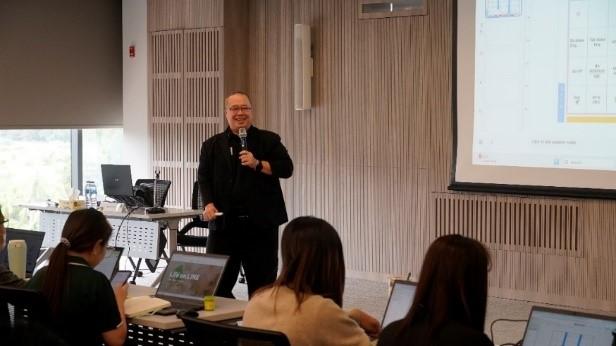
HARN prioritizes employee development from day one. We focus on equipping our employees with essential job-related skills while cultivating a positive mindset and self-development motivation through tailored learning paths. Our goal is to transform HARN into a 'Learning Organization' where every employee can access knowledge to advance their careers and deliver tangible value to the company. In 2025, we implemented capacity-building programs covering both future-ready skills and specialized expertise. These initiatives aim to elevate operational standards and ensure the delivery of high-value, sustainable solutions to our customers, as detailed below:
1) Management & Professional Skills Development
1.1) Enterprise Risk Management (ERM)
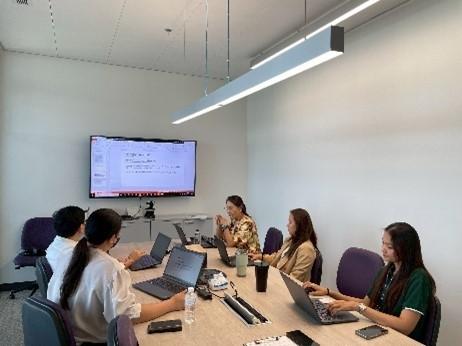
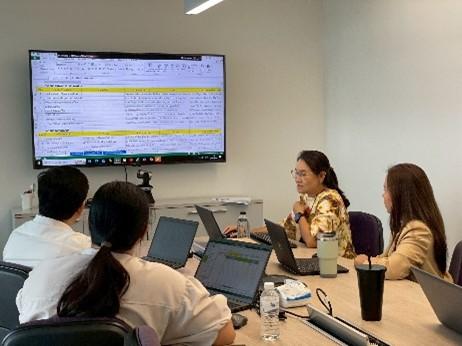
The Company recognizes that effective risk management is a vital foundation for stable and sustainable growth. Consequently, a specialized training course was organized for Business Unit Managers to enhance their understanding of identifying, analyzing, and assessing risks that could impact strategic objectives. This program empowers managers to systematically handle operational obstacles, establish preventive measures against external variables, and implement monitoring systems to prevent all forms of corruption. This ensures that each unit’s operations align with corporate goals. In 2025, 4 junior executives participated in the training, totaling 12 learning hours (an average of 3 hours per person)
1.2) Effective Communication for Collaboration
The Company believes that effective communication is the cornerstone of successful teamwork. This training course was organized to develop systematic sending and receiving of information, minimize misunderstandings, and foster a work environment that promotes Cross-functional Collaboration. The program emphasized Active Listening techniques and positive communication strategies to mitigate conflict. A total of 45 employees from all levels participated in the training, amounting to 270 learning hours (an average of 6 hours per person), with an average satisfaction rating of 89%.
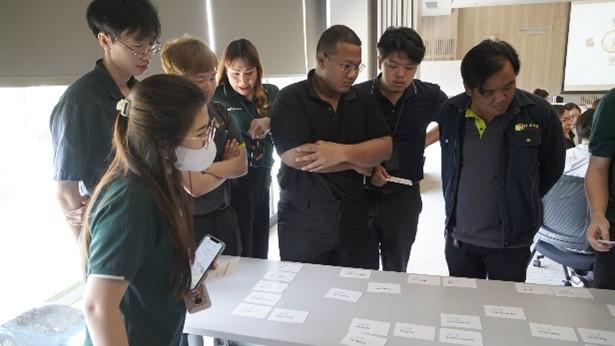
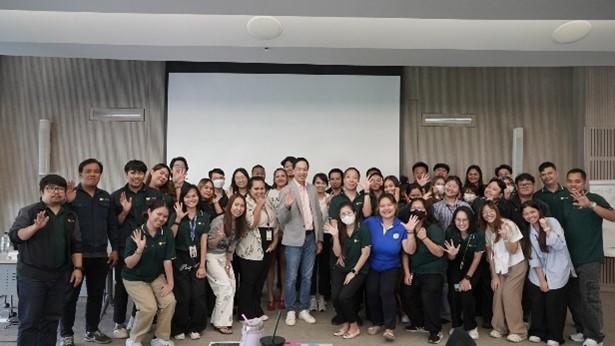
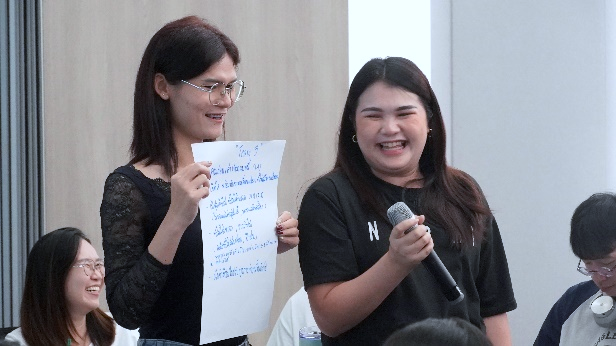
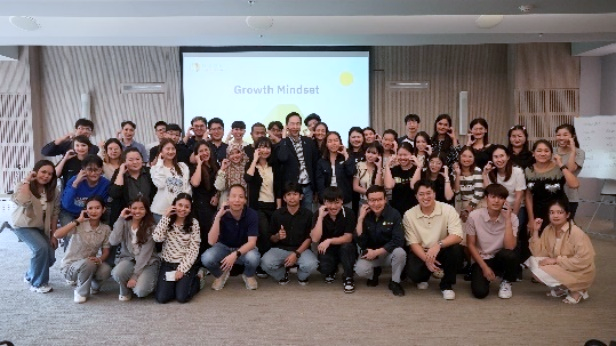
1.3) Growth Mindset for Sustainable Self-Development
The Company recognizes the importance of preparing our personnel for rapid business transformations. Cultivating a Growth Mindset—the ability to seek opportunities within challenges—and encouraging continuous professional development are essential for aligning our workforce with corporate values and culture. This course focuses on fostering positive attitudes toward oneself and others, building a foundation for effective Collaboration and internal innovation. The program was attended by 43 employees from all levels, totaling 258 learning hours (an average of 6 hours per person), with an outstanding satisfaction rating of 96%.
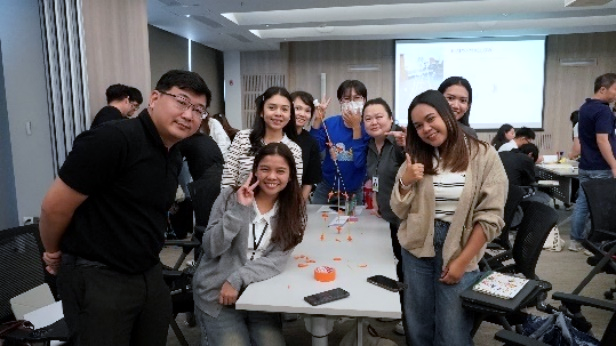
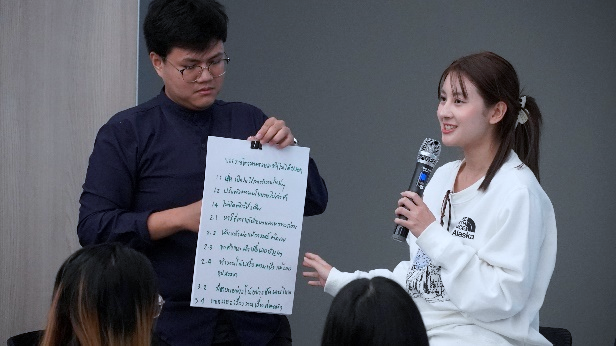
1.4) Problem Solving and Decision Making Process
This curriculum focuses on elevating employee capabilities to effectively navigate business challenges. It equips staff with Systematic Thinking and a Problem-solving Mindset, enabling them to manage situations and workflows step-by-step with sound reasoning. The course teaches participants to identify areas for improvement, ask the right questions, and gather accurate data. These skills are critical factors in reducing operational errors and ensuring that performance aligns with corporate goals. The program was attended by 42 employees from all levels, totaling 252 learning hours (an average of 6 hours per person), with an average satisfaction rating of 86%.
2) Digital Literacy & Future Technology (AI)
2.1) Leveraging Generative AI for Workplace Productivity
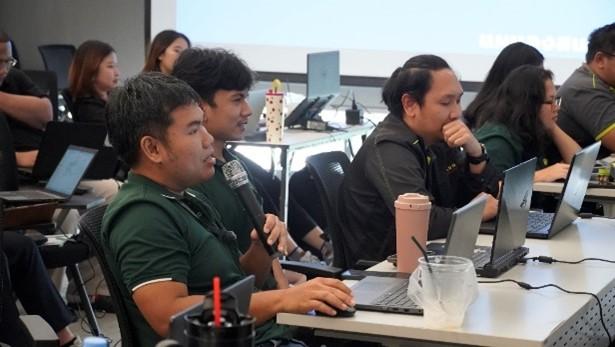
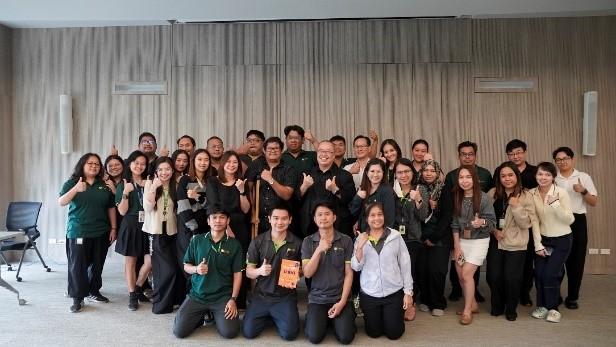
The Company is committed to enhancing its competitive edge by integrating modern technology into its operations. We have introduced Generative AI to streamline processes across all departments, including Sales, Services, and Back Office functions. The training focused on developing systematic Prompt Engineering skills to improve speed and accuracy in tasks such as professional email drafting and deep-data summarization. Simultaneously, the program instilled awareness of AI Ethics and Security, covering critical areas such as AI limitations, data verification, and compliance with the Personal Data Protection Act (PDPA). A total of 32 employees from all levels participated in the training, amounting to 192 learning hours (an average of 6 hours per person), with an average satisfaction rating of 90%.

3) Engineering Expertise and Safety Standards
As our Sales and Service teams are the heart of building customer trust, we are committed to developing their knowledge, skills, and positive mindsets. We focus on enhancing their technical expertise and service potential, fostering professional personality, and instilling a strong service mind. Our goal is to empower our staff to act as expert consultants and professional problem-solvers, ensuring superior customer satisfaction and sustainable trust.
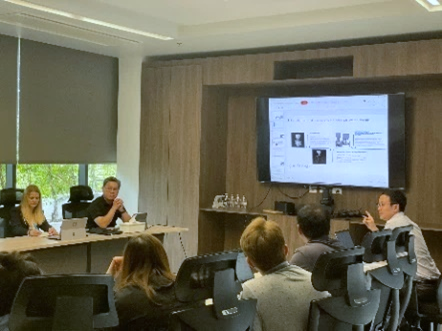
3.1) Engineering Knowledge and Technical Proficiency.
Business Unit | Relevant Courses |
Fire Protection Systems |
|
Digital Printing Systems |
|
Refrigeration System |
|
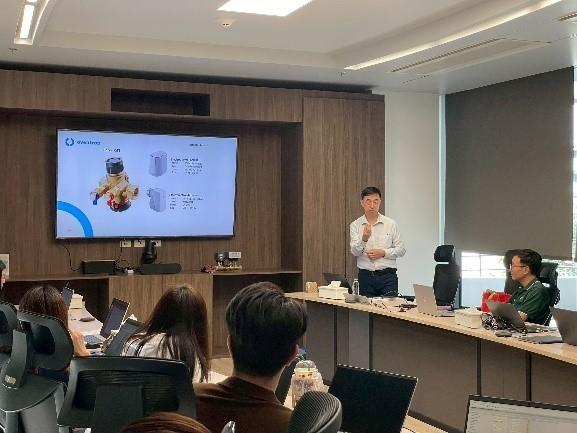
Oventrop SMART VALVE Product Knowledge and Technical Applications
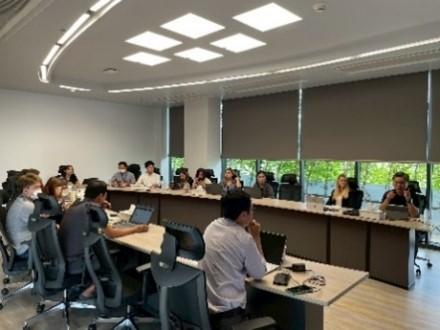
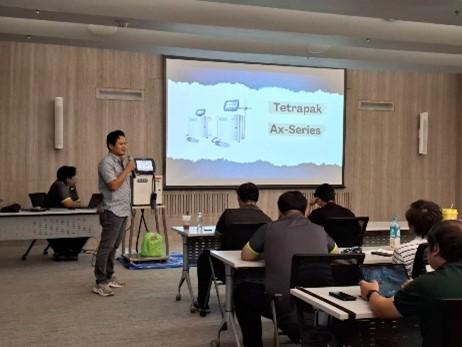
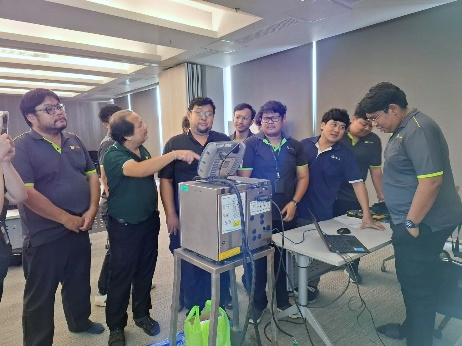
Domino Ax-Series Product Knowledge and Advanced Inkjet Technology
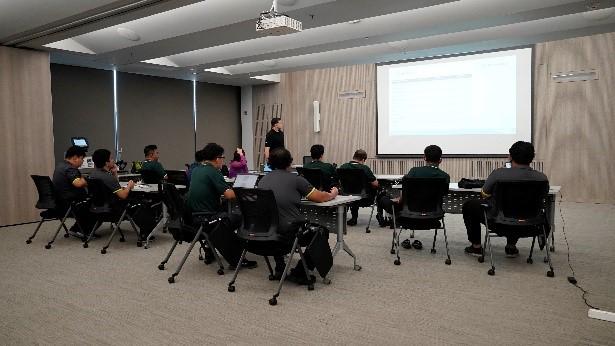
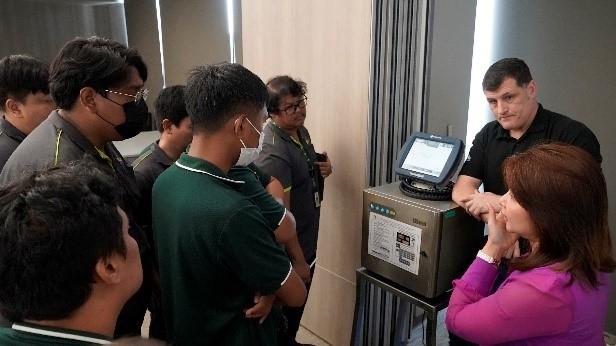
Technical Integration and Configuration of Domino AX-Series with Tetra Pak Filling Lines
Oventrop Product Solutions: Stainless Steel, General, and Energy Valves
Installation and Implementation of Centralized Label Management Systems (Domino Automation)
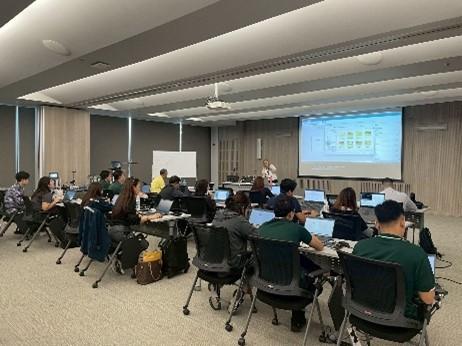
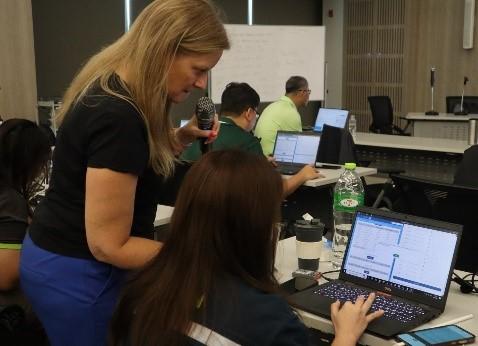
3.2) Electrical Safety in the Workplace
The Company places the highest priority on promoting workplace safety and a healthy environment to ensure full compliance with legal safety management standards and to elevate operational excellence. Consequently, the 'Electrical Safety in the Workplace' training program was organized to equip employees with a comprehensive understanding of safety laws, standards, and correct operational procedures. This initiative aims to prevent accidents arising from electrical hazards and fire risks, specifically focusing on enhancing skills in Risk Assessment, the proper selection of Personal Protective Equipment (PPE), and Emergency First Aid and rescue techniques. A total of 22 employees, including Service Engineers, Project Engineers, and Building Technicians, participated in and successfully passed the training. The program accounted for a total of 132 learning hours (averaging 6 hours per person), achieving an outstanding average test score of 98% and an average satisfaction rate of 96%.
4) Conclusion of Training and Employee Development
Employee Development Summary | Unit | 2025 | 2024 | 2023 |
Total Employees | person | 254 | 248 | 240 |
Employee training target | person/year | ≥ 6 hours | ≥ 6 hours | ≥ 6 hours |
Number of training hours | hour | 5,924 | 6,379 | 6,364 |
Training Data
| Metric | Current Year | Previous Year | Two Years Ago |
|---|---|---|---|
| Average employee training hours (Hours / Person / Year) | 23.32 | 25.72 | 26.52 |
| Employee development and training expenses (baht) | 607,517 | 665,905 | 1,031,586 |
Employees — Occupational Health & Safety
Introduction
HARN prioritizes the safety and occupational health of our employees, contractors, and all related personnel. We have established policies and management systems that promote safe operations in accordance with international standards and strict compliance with the Occupational Safety, Health, and Environment Act B.E. 2554 (2011). Furthermore, we have appointed a Safety Committee to oversee, monitor, and report on occupational health and safety performance comprehensively and equitably. This includes conducting risk assessments and developing operational plans and preventive measures to mitigate risks related to safety, health, and the working environment.
In 2024, HARN reviewed its Occupational Safety, Health, and Environment (SHE) Manual, work regulations, and operating procedures to ensure full legal compliance. These serve as safety guidelines and training materials for our employees. As a result of our commitment to safety management for both employees and contractors, HARN’s performance in 2025 is as follows:
Occupational Health & Safety Data
| Metric | Current Year | Previous Year | Two Years Ago |
|---|---|---|---|
| Total number of lost time injury incidents by employees (Cases) | 0 | 0 | 2 |
Employees — Labour Relations
Labour Relations Data
| Metric | Current Year | Previous Year | Two Years Ago |
|---|---|---|---|
| Total voluntary resignations (Persons) | 43 | 38 | 28 |
| Male employees who voluntary resigned (Persons) | 14 | 22 | 16 |
| Female employees who voluntary resigned (Persons) | 29 | 16 | 12 |
| Percentage of employee turnover leaving the Company voluntarily (%) | 16.8 | 15.32 | 11.48 |
| Evaluation result of employee engagement | 1 | 1 | 1 |
Employees — Employee Representation
Employees Are Represented Collectively
Yes
Forms of Representation
| Form |
|---|
| Welfare committee |
Employees — Targets
Has Set Employee Targets
No
Employees — Performance & Outcomes
Has Performance Results
No
Customers — Plan & Guidelines
Has a Customer Management Plan
Yes
Plan Description
Customer/Consumers Responsibility Management and Development
1) Confidentiality of Customer’s Personal Data
HARN to the importance of respecting the rights and committing to protect the personal data of customers which have been collected, stored, used, and revealed in presenting products and services to meet the needs as appropriate, accordance with personal data protection notice to show transparency in its operations, which has policies and guidelines are in accordance with the Personal Data Protection Act (PDPA) through its website www.harn.co.th, covering the following:
Personal data collected by HARN
bjectives of personal data processing
Disclosure of personal data
Duration of personal data collection
Rights of the owners of personal data
Contact channels to HARN and personal data protection officers
Review of policies on privacy
The personal data protection officers (DPO) are responsible for protecting customers’ personal data. To protect confidential information from leaking to external parties, the confidentiality of the data is categorized by level of importance and is limited to the scope of duties and responsibilities assigned. HARN provides a complaint channel regarding customers’ personal data through the website www.harn.co.th. If any customer has a complaint, HARN will investigate the facts, consider corrective actions, provide advice or suggestions, and identify measures to resolve the issue. A suitable time frame for investigation will be set, taking into account the nature of the issue and the corrective action to be taken in collaboration with the relevant parties. In case of financial damage, compensation will be provided based on the severity of the issue, or legal penalties may be applied depending on the case.
In 2025, HARN complied with the framework of the Personal Information Protection Act (PDPA). There were no complaints from customers regarding the protection of their personal data.
2) Responsibility to Consumers/ Consumers
HARN is committed to selling products that meet international standards, developing services in line with customer expectations and satisfaction, and adhering to business ethics when interacting with customers with responsibility and integrity with the highest benefit of customers in mind, under the policies that focus on customer responsibility and development. Emphasis is placed on the development of products, services, and solutions, utilizing information technology and technology as tools to manage sales processes to improve the efficiency of delivering products and services to customers as targeted. Also uses technology to monitor potential issues and obstacles to ensure that planning for expansion and product delivery aligns with customer needs. Additionally, HARN is transitioning to an environmentally friendly business and fosters customer engagement through Facebook, its website, Line Official Account, and seminars, allowing customers to securely access and exchange information via digital systems.
Furthermore, HARN continuously focuses on improving its management system in accordance with ISO 9001:2015 standards and developing the correct knowledge and understanding among employees and stakeholders regarding workplace safety to ensure the safety and reliability of products and services delivered to customers. A department is designated to regularly inspect product quality standards every month, and a separate unit inspects the operational systems, service processes, and methods for addressing feedback and complaints. These activities are aligned with company policies, announcements, and operating regulations, and suggestions and complaints will be promptly considered for improvement and corrective action within an appropriate time frame.
In 2025, there were no complaints from customers regarding the safety and environmental aspects of product use, according to an audit by the ISO Certification Institute from SGS (Thailand) Co., Ltd.
HARN with realization of the importance of products that enhance quality of life and safety of customers/consumers, HARN has paid great care and attention to all processes on an end-to-end basis until the goods reach the customers/consumers according to policies and guidelines, as follows;
3) Quality and standard of the products
HARN emphasizes on the quality and the standard of the distributed products so that the customers can be confident in the quality and the safety of the products that follows the terms and conditions agreed upon with HARN. The products sold by HARN are mostly certified by the UL (Underwriters Laboratories) and/or FM (Factory Mutual) and/or BS (British Standard) and/or TIS (Thai Industrial Standards) and/or EN (European Standard) and/or Vds Standard. As for HARN’s OEM, these are produced under BS or ASTM International, including all aspects of HARN’s operation is certified by the ISO 9001:2015.
Note: - Underwriters Laboratories (UL), safety standards by the Underwriters’ Laboratories Inc. (UL), non-profit independent organization from the USA. Responsible in testing and prepares the safety standards and safety insurance of the products.
- Factory Mutual (FM), responsible in testing protective and fire extinguisher equipment of the insurance group in the USA.
- British Standard (BS), safety standards by the British Standard Institution (BSI)
- Thai Industrial Standards (TIS), industrial standards, products guaranteed by the Thai Industrial Standard Institute.
- VdS Is an independent institution that tests fire prevention and extinguishing equipment That guarantees safety and reliability in the field of fire protection and safety Germany
4) Products Insurance
HARN ensures the damages or defectives of products following the insurance conditions of the products that HARN distributes or installs for the customers for 6 months to 1 year, for the machines and the spare parts, respectively. The products of HARN had been insured already by the suppliers for similar time. For project sales, after completion of installation work, HARN ensures the installed products under the conditions for 1 year where the suppliers also ensure the products to HARN for 1 year as well and may consider purchasing additional warranty from the seller in case the customer wants a longer warranty.
5) Processes of storing products in warehouses and transportation products
HARN has 3 warehouses: as follow;
The main warehouse, is located at 888/14-16 Moo.21, Bang Phli Yai, Bang Phli, Samut Prakan 10540. The rental area covers 6,374.23 square meters which HARN owns the ownership to store valve products and other products in Fire protection system, Air-Conditioning system, Sanitary system, Refrigeration system and Digital printing system. This place is also used to assembly equipment’s on a made to order basic.
The 2nd warehouse, is located at 509 Soi Soonvijai 4, Rama 9 Road, Bang Kapi Subdistrict, Huai Khwang District, Bangkok 10310. The premises are leased from a company affiliated with HARN and are used for storage, assembly, and maintenance of printers and related equipment, as well as for other business operations related to the digital printing system.
The 3rd warehouse, is located at 38/43, Moo 4, Lam Luk Ka Road, Lam Luk Ka, Lam Luk Ka, Pathum Thani 12150. This place covers 80 square meters and is rented from an external company provides the warehouse service which is not involved with HARN. It is used to keep hazardous chemicals that purchased from manufacturer and wait to distribute to customer or use to install the fire protection system for customer.
Processes of storing products in warehouses
Warehouse staff prepare space to store and a bar code product as details receives from a purchasing staff to check correctness and make an acknowledgement receipt. Which warehouse staff will inspect product type, quality, quantity, bar code, and acknowledgement receipt to correctness. Then, will store products in warehouse, placing products came first outside and products came later inside for convenience in next distribution and control quality of product before reaches customer. In case of incorrect purchasing and product defect/ damage, the warehouse staff will report to the purchasing division in order to examine as well as inform manufactures, and/or the insurance.
Processes of transportation products
Delivery staff record a picking list and makes a delivery control note to the warehouse staff for check name of customers, product quantity, delivery place, and to plan a logistic route, in order the sales division will have data to inform customer an appointment about the estimated delivery time. Also, packing staff to collect documents related for all delivery to transportation providers who contracted by HARN for check type, detail, and total of products delivery, then, sign on the delivery control note as evidence. After that, deliver to accord to route specified, In case of emergency delivery or appointment for advanced shipping, the packing staff will receive a delivery note from salesperson and coordinate with to transportation providers who contracted by HARN.
HARN delivers products from its warehouses to customers, with delivery costs included in product prices, using its own trucks and third-party transport providers that are independent of HARN and approved under its Approved Vendor List (AVL). HARN also maintains insurance coverage for goods stored in its warehouses against risks such as fire, lightning, earthquake, storm, flood, and other accidents, covering the value of assets at both the head office and the warehouses.
HARN maintains domestic transit insurance for high-value purchase orders to cover loss or damage to goods while in transit, with HARN as the sole beneficiary. From 2012 to the present, HARN has had no claims arising from major incidents, except for minor damages during warehouse handling, with each claim not exceeding THB 10,000.
Note: HARN’s will determine a sum assured in each year according to asset values from the latest financial budget before having insurance and review the increase/decrease of insurance amount as appropriate.
Plan Document Link
https://www.harn.co.th/storage/downloads/corporate-governance/code-of-conduct/harn-business-code-of-conduct-th.pdf
Page Number in Report
8
Plan Areas
| Plan Area |
|---|
| Responsible production and services for customers |
| Communication of product and service impacts to customers/consumers |
| Development of customer satisfaction and customer relationship |
| Protection of customer personal information |
Customers — Satisfaction Results
Introduction
Customer Relationship Management Plan
HARN places customer satisfaction at the core of its business operations and has implemented the ISO 9001:2015 quality management system across the organization. The Company has established a quality policy stating, “We strive to delight our customers with high-quality products and services, advanced technology, and excellent business management,” in order to maintain and enhance customer satisfaction with its products and services. This policy is communicated comprehensively to all business units.
In addition, HARN focuses on strengthening customer relationships through ongoing marketing activities, such as customer visits, promotional campaigns, customer satisfaction surveys conducted at least once a year, and training programs on its products and services. These initiatives help build trust, foster partnerships, and promote long-term customer loyalty through repeat purchases and continued use of the Company’s services.
The Company manages customer complaints in a systematic and end-to-end manner through its website www.harn.co.th, which serves as a platform for receiving, tracking, and reporting the resolution of customer complaints across all business units. In parallel, the Company conducts customer satisfaction surveys on delivered products and services, using the feedback to continuously improve product quality, service standards, and internal processes on an annual basis. This information is considered essential in enhancing the Company’s understanding of customer needs.
In 2025, the Quality Management Department was responsible for monitoring product quality, service delivery, customer complaints, regulatory compliance, and conducting customer satisfaction surveys, which were distributed to customers in October 2025. All customer complaints received were resolved within an appropriate timeframe, representing a resolution rate of 100%. The average customer satisfaction score for 2025 was 94.10%, a slight decrease of 0.04% compared to 2024, while remaining 4.10% above the target level of 90%.
Based on the customer satisfaction survey results, HARN has continued to maintain a high level of customer satisfaction by improving product quality and service delivery, expanding communication channels and after-sales support, and regularly providing customers with business-relevant information. The survey findings are also communicated to relevant departments to support improvements in products, services, and operational processes, thereby further enhancing customer satisfaction in line with customer needs.
In 2026, the Company plans to incorporate Net Promoter Score (NPS) analysis into its customer satisfaction surveys as an additional tool to assess customer satisfaction and brand loyalty. The results will be used to enhance operational improvements and more effectively address customer needs.
Nevertheless, HARN remains committed to building strong customer relationships by emphasizing marketing initiatives, continuously enhancing product knowledge among sales-related employees through regular training, and consistently developing new products. These efforts aim to deliver products and services that meet customer expectations and earn their trust.
Customer Satisfaction | 2025 | 2024 | 2023 |
Products and Services (Product Quality, Product Variety, and Service Quality) | 93.60 | 93.50 | 92.91 |
Sales Staff, Service Staff, and Project Engineers (Knowledge of Products, Services, Troubleshooting, and Installation) | 94.35 | 94.27 | 93.65 |
Other Services (Management, Information Provision, and Communication with HARN) | 94.36 | 94.64 | 93.94 |
Overall Average Satisfaction | 94.10 | 94.14 | 93.50 |
Customer Satisfaction Results
| Metric | Current Year | Previous Year | Two Years Ago |
|---|---|---|---|
| Evaluation results of customer satisfaction | 1 | 1 | 1 |
Customers — Targets
Has Set Customer Targets
No
Customers — Performance & Outcomes
Has Performance Results
No
Community & Social — Overview
Introduction
HARN upholds 'Value Creation' as a core corporate value and a fundamental pillar of our business operations. We are committed to transitioning from traditional Corporate Social Responsibility (CSR) toward Creating Shared Value (CSV). By leveraging our specialized expertise and corporate resources, we aim to address social challenges and tangibly enhance the quality of life within our communities.
As a leading provider of comprehensive engineering services—covering fire protection, air conditioning, sanitary, refrigeration, digital printing, and 3D bioprinting systems—we remain steadfast in our mission to operate responsibly. We leverage our human capital, advanced technology, and a robust network of public and private partners to create a sustainable positive impact on society, communities, and the environment.
The Company has established a comprehensive management framework aligned with the expectations of all stakeholder groups to create shared value (CSV) and foster a positive corporate image. By delivering holistic social outcomes, we aim to achieve mutual sustainability for the future. Key operational highlights for 2025 are as follows:
Community & Social — Plan & Guidelines
Has a Community & Social Plan
Yes
Plan Description
The Company is committed to conducting its business with responsibility toward the community and society, with the aim of creating shared value and achieving sustainable growth. To this end, the Company has established a Community and Social Management Plan to ensure that its operations do not cause adverse impacts on surrounding communities, while continuously promoting positive contributions to society.
The Company has identified and analyzed relevant stakeholders, including local communities, government agencies, and related organizations, and has implemented appropriate engagement approaches. These include regular communication, the provision of channels for feedback and complaints, and participation in community activities to better understand stakeholders’ expectations and concerns.
In terms of social development, the Company implements various projects and initiatives, such as educational support, community development, environmental conservation, and emergency assistance. These efforts aim to enhance the quality of life of communities, strengthen resilience, and foster long-term relationships.
In addition, the Company has established measures to prevent and mitigate potential social impacts arising from its operations. This includes regular monitoring and assessment of social risks, the establishment of transparent grievance mechanisms, and the continuous improvement of operations based on stakeholder feedback.
The Company also encourages employee participation in social responsibility activities to cultivate a sense of social awareness and responsibility. Performance is regularly monitored to ensure alignment with the Company’s sustainability objectives.
Through these approaches, the Company aims to build trust, enhance social well-being, and grow sustainably alongside the community.
Plan Document Link
https://www.harn.co.th/storage/downloads/corporate-governance/corporate-governance-policy/harn-corporate-governance-policy-th.pdf
Page Number in Report
25
Plan Areas
| Plan Area |
|---|
| Employment and professional skill development |
| Education |
| Forests and natural resources |
| Disadvantaged and vulnerable groups |
| Water and sanitation management |
| Reducing inequality and promoting social equality |
Community & Social — Targets
Has Set Community & Social Targets
No
Community & Social — Performance & Outcomes
Has Performance Results
Yes
Performance Description
The Company conducts its business with responsibility toward the community and society, placing importance on minimizing environmental impacts and avoiding operations that may negatively affect the quality of life of communities surrounding its facilities. In 2025, there were no complaints from communities regarding social or environmental issues.
In addition, the Company actively contributes to improving quality of life and promoting community engagement. In 2025, the Company carried out the following activities in collaboration with communities:
1. Knowledge Sharing and Academic Collaboration
Leveraging our extensive experience and expertise in refrigeration and IoT systems, HARN has shared its specialized knowledge with academic institutions. This initiative aims to empower students and engineering personnel with in-depth insights gained from real-world industrial practices. By cultivating a high-quality workforce for the labor market, we are not only developing the nation's human capital but also playing a vital role in elevating Thai engineering standards for long-term sustainable growth.
1) King Mongkut's University of Technology North Bangkok (KMUTNB)
1.1 Department of Refrigeration and Air Conditioning Engineering Technology: Conducted a specialized lecture on 'Introduction to Refrigeration Systems and IoT Application for Cold Storage.' The session focused on transferring knowledge of modern technologies and the integration of IoT to optimize cold storage management efficiency.
The first session was held on September 3, 2025, with Mr. Kittiphong Kittimethaveenan as the guest speaker.
The second session was held on September 10, 2025, with Mr. Phanuwat Intraphat as the guest speaker.
The third session was held on September 17, 2025, with Mr. Panuwat Intarapaet as the guest speaker.
The final session was held on October 1, 2025, with Mr. Sathit Wanichchaikit as the guest speaker.
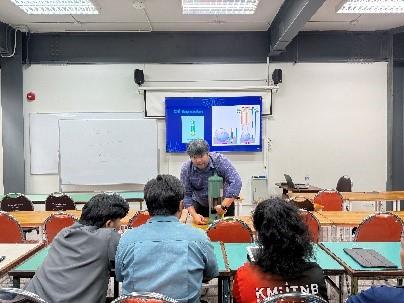
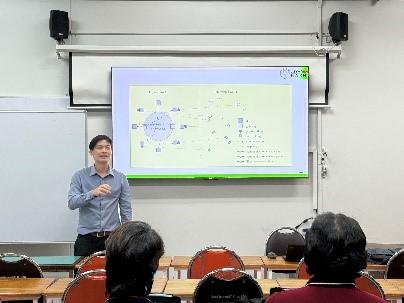
1.2 Department of Power Engineering Technology, College of Industrial Technology: Conducted a lecture on 'Commercial Refrigeration System Knowledge.' The objective was to provide students with a comprehensive understanding of the architecture and operational processes of refrigeration systems used in industrial applications.
The first session was held on December 16, 2025, with Mr. Kittiphong Kittimethaveenan as the guest speaker.
The second session was held on December 23, 2025, with Mr. Phanuwat Intraphat as the guest speaker.
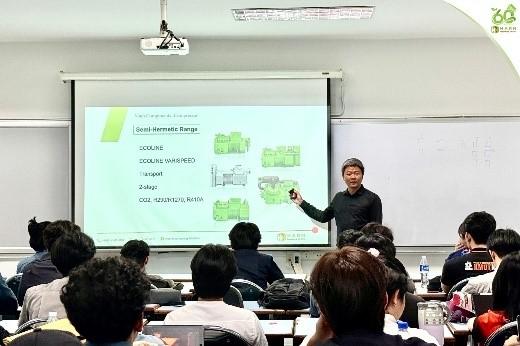
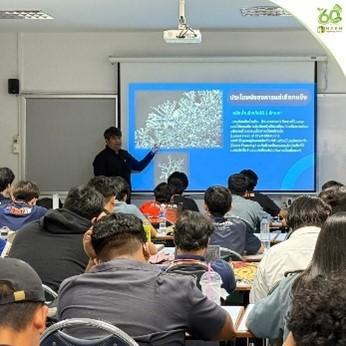
2) King Mongkut's Institute of Technology Ladkrabang (KMITL)
School of Engineering, Department of IoT and Information Engineering: Conducted a guest lecture on 'IoT in the Cooling System Business (Cold Storage)' to enhance understanding of integrating information technology and smart systems into the refrigeration industry. This session enabled students to visualize the convergence of mechanical engineering and digital database systems. The lecture was held on October 6, 2025, by Mr. Phanuwat Intraphat and Mr. Sathit Wanichchaik
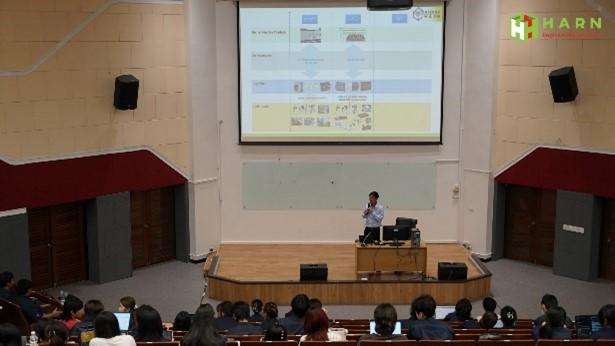
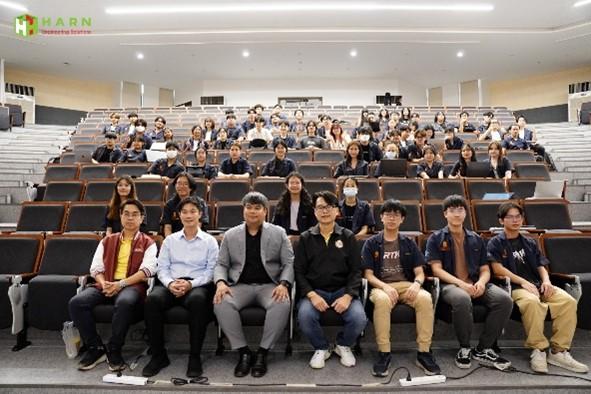
2. Support through Donations and Volunteer Activities
HARN is committed to operating its business alongside social and environmental responsibility, aiming to enhance the quality of life and contribute to a sustainable society. In 2025, the Company engaged in various public interest activities through charitable donations supporting education, healthcare, and disaster relief. Furthermore, we fostered a culture of volunteerism by continuously encouraging our employees to participate in social contribution initiatives, as detailed below:
1) HARN Hearts for Flood Relief Project
In response to the widespread impact of severe flooding in the Southern region, the Company organized a fundraising initiative to provide urgent assistance and relief to those affected by the disaster.
HARN extended its support to social and charitable causes through a collective donation from the management and employees, totaling 46,000 Baht. The contribution was presented to the Songklanagarind Hospital Foundation in Hat Yai, Songkhla Province, to support medical missions, patient care for flood victims, and the restoration of damaged healthcare facilities. Additionally, essential consumer goods were gathered and donated to the Thai Red Cross Society to be distributed to affected individuals in the disaster areas.
Beyond external assistance, the Company prioritizes the well-being of its own people. HARN provided financial remedial aid to the families of three employees directly affected by the floods, totaling 13,000 Baht. This support was intended to alleviate immediate hardships and bolster employee morale during this challenging crisis.
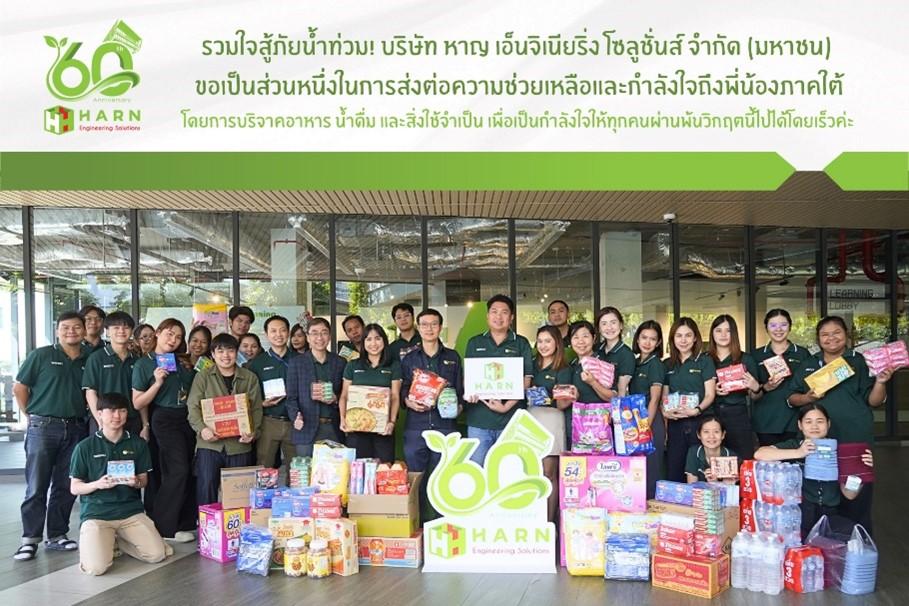
2) HARN United for Educational Opportunity Project
Recognizing that education is the fundamental cornerstone of sustainable national development, HARN has initiated activities to support schools in remote and underprivileged areas. Our efforts are dedicated to enhancing the quality of life and elevating the learning environment to empower young generations for a brighter future. On December 19, 2025, HARN’s management and employees visited Ban Thung Klet School in Ko Lak Sub-district, Mueang District, Prachuap Khiri Khan Province. The team organized activities to hand over educational supplies and scholarships. Furthermore, the Company provided financial support for building renovations and landscaping to ensure a safe and conducive learning environment for the students. The total contribution for this initiative amounted to 210,009.20 Baht. Beyond the financial contribution, HARN employees actively participated in bonding activities with the students. Our team also prepared and served a special lunch, bringing joy and smiles to the children while bolstering the morale of the school’s faculty and staff.
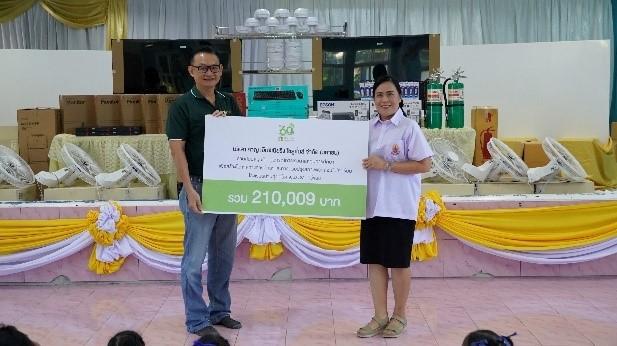
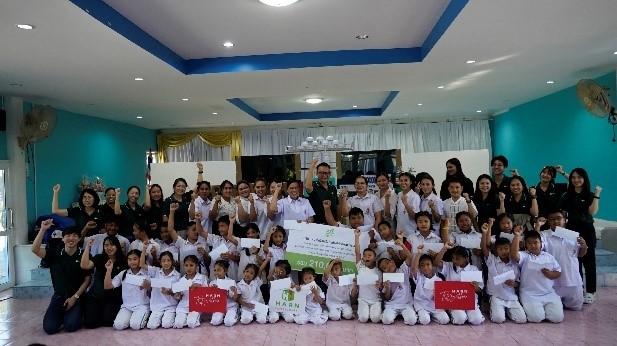
3) Clean Drinking Water for Students Project
Driven by a commitment to student health and hygiene at Ban Phu Khae School in Ratchaburi Province, where students previously relied on village groundwater systems, HARN launched the 'Clean Drinking Water for Students' project. We recognize the vital importance of access to safe, hygienic drinking water—especially in remote educational institutions—and aim to elevate sanitation standards for the well-being of the youth. On March 8, 2025, the Company handed over two water filtration systems and one stainless steel drinking water cooler to the school. In addition to the equipment, our team engaged in recreational activities and sports with the students, fostering a strong relationship and a warm atmosphere between the Company and the local community.
4) Giving from the Heart, Growing Together Project
HARN recognizes the importance of reducing educational inequality and enhancing the quality of life for youth in remote areas and underprivileged groups. Through the 'Giving from the Heart, Growing Together' project, we invited our valued customers to donate essential items or join our volunteer trips. This collaborative approach expands our reach and strengthens the relationships between the Company, our customers, and the community. The project was implemented in two primary locations as follows:
4.1 Promoting Educational Opportunities at Ban Yang Ngam School, Phunphin District, Surat Thani Province: Due to a shortage of educational supplies and economic hardships faced by many students' families, the Company—together with employees and customer partners—contributed essential learning materials. This support aims to ensure the children are well-equipped for their studies and to bolster their motivation in pursuing their education.
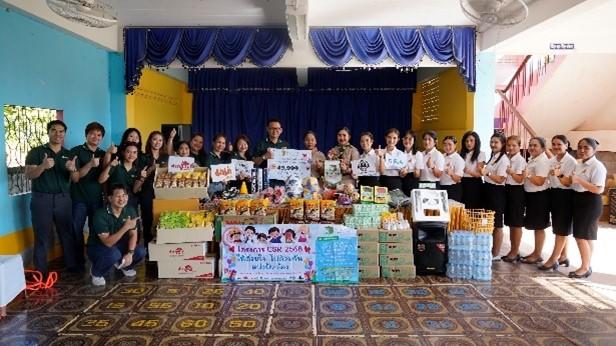
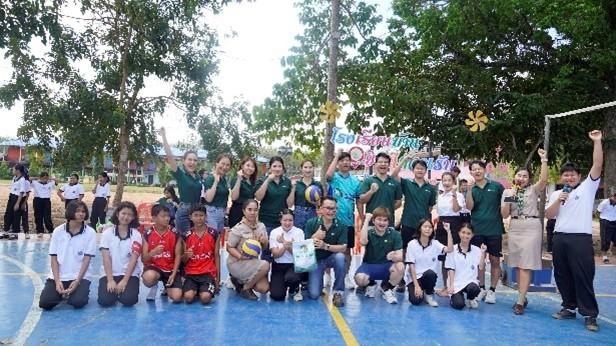
4.2 Supporting Quality of Life at Wat Don Chan School (School for Life), Mueang District, Chiang Mai Province: HARN actively contributed to supporting orphans, underprivileged children, and children from disadvantaged backgrounds through the donation of rice, dry food, and essential consumer goods necessary for daily living. This initiative was driven by goodwill and the collective efforts of the Company’s management and employees, who jointly raised funds and procured essential supplies to support the improvement of students’ quality of life. Beyond alleviating shortages, these contributions also symbolized the delivery of encouragement and care from the HARN family to students and educational personnel in the local communities, reinforcing the Company’s commitment to fostering the healthy and sustainable development of future generations.
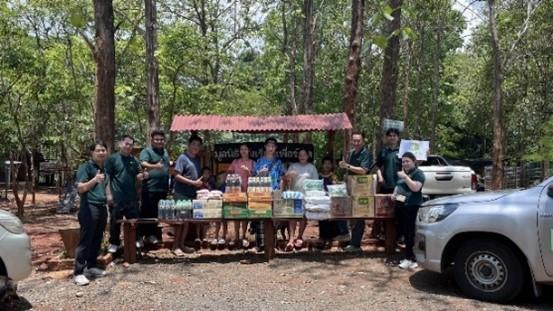
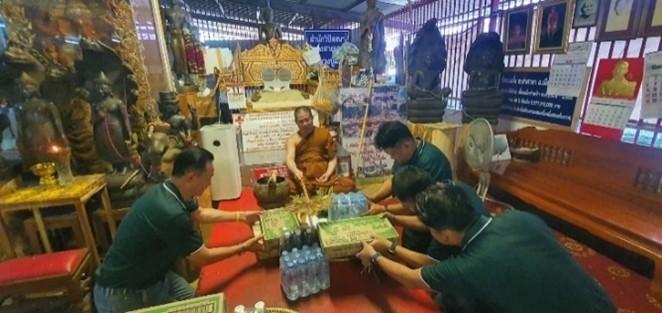
5) Pass the Love, Share the Learning Project
The 'Pass the Love, Share the Learning' project was initiated to promote a culture of sharing and to expand educational opportunities for underprivileged youth. We invited our management and employees to donate high-quality, pre-owned clothing and personal items. These contributions were transformed into funds to provide scholarships for students under the Yuvabadhana Foundation, directly supporting the educational continuity of underprivileged children. This initiative reflects HARN’s steadfast commitment to Corporate Social Responsibility (CSR), aiming to reduce educational inequality while fostering a culture of sharing and circular resource management among our personnel. Through this project, our executives and employees collectively donated a total of 231 items. These contributions were converted into scholarships worth 15,300 Baht, which successfully supported 2 underprivileged students (with an average scholarship of 7,000 Baht per student/year).
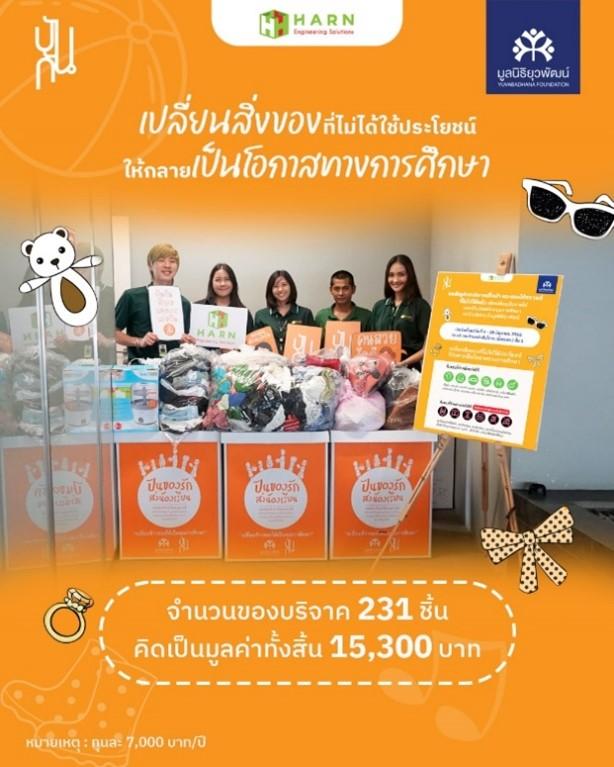
Other Social Management
Plan & Outcomes — Description
Vanpha Project (Update)
In 2024, HARN signed a Memorandum of Understanding (MOU) for the Vanpha Project, collaborating with: The Ananda Mahidol Foundation Scholarship Club, Kasetsart University, Silpakorn University, The Geo-Informatics and Space Technology Development Agency (GISTDA), Siam Cement Public Company Limited (SCG), Mew Space & Advance Technology Co., Ltd and The Department of National Parks, Wildlife and Plant Conservation. The project focuses on researching carbon sequestration and net carbon dioxide balance in dry dipterocarp forest ecosystems through remote sensing surveys, under the initiative named “Vanpha Project”.
This MOU establishes a partnership between government agencies, the private sector, and the Department of National Parks with the objective of developing methodologies for carbon measurement and establishing a carbon accounting system, as well as assessing carbon credits from natural forests, including both aboveground and belowground biomass, using remote sensing technology. The assessments are conducted according to Tier 3 standards to monitor greenhouse gas reductions caused by deforestation and forest degradation from recurring wildfires in Mae Ping National Park, Lamphun Province. The project also supports natural forest regeneration by reducing the frequency and recurrence of forest fires, allowing the ecosystem to recover naturally. This initiative aims to enhance carbon management, mitigate greenhouse gas emissions, and promote sustainable forest restoration.
The Tier 3 standard involves assessing carbon dioxide exchange using the Eddy Covariance Technique, which integrates geospatial and satellite data with ground measurements collected through permanently installed monitoring equipment on towers, also known as Flux Towers, operating continuously 24 hours a day. The collected data are then processed through mathematical models to calculate greenhouse gas emissions, providing a standardized, fast, and highly accurate measurement method. Simultaneously, the project conducts research to assess carbon credits from reducing recurrent forest fires by working collaboratively with the Department of National Parks and local communities to protect the forest, prevent fire intrusion, and manage watershed areas to enable natural forest regeneration. The process and standards are developed by a group of eight expert organizations and presented to the Thailand Greenhouse Gas Management Organization (Public Organization). This system allows the private sector to support wildfire reduction by investing in community enterprises, creating jobs for local communities to care for forests, in exchange for the carbon credits generated through scientifically and satellite-verified processes. If implemented nationwide in protected forests, this approach is expected to channel significant private-sector investment into forest protection and fire prevention while simultaneously generating sustainable employment in local communities.
Currently, the Vanapha Project has completed the installation of carbon monitoring towers. Thai President Foods Public Company Limited and HARN Engineering Solutions Public Company Limited have begun a pilot program employing two vulnerable individuals previously involved in forest collection, hunting, and fire-setting. The employment is structured under Sections 33 and 35 of the Promotion and Development of Quality of Life of Persons with Disabilities Act, providing income to the families of the individuals while restoring their human dignity. This initiative demonstrates to society that people with disabilities can contribute meaningfully to themselves, their families, and the community, transforming past destructive behaviors into positive social and environmental impact.
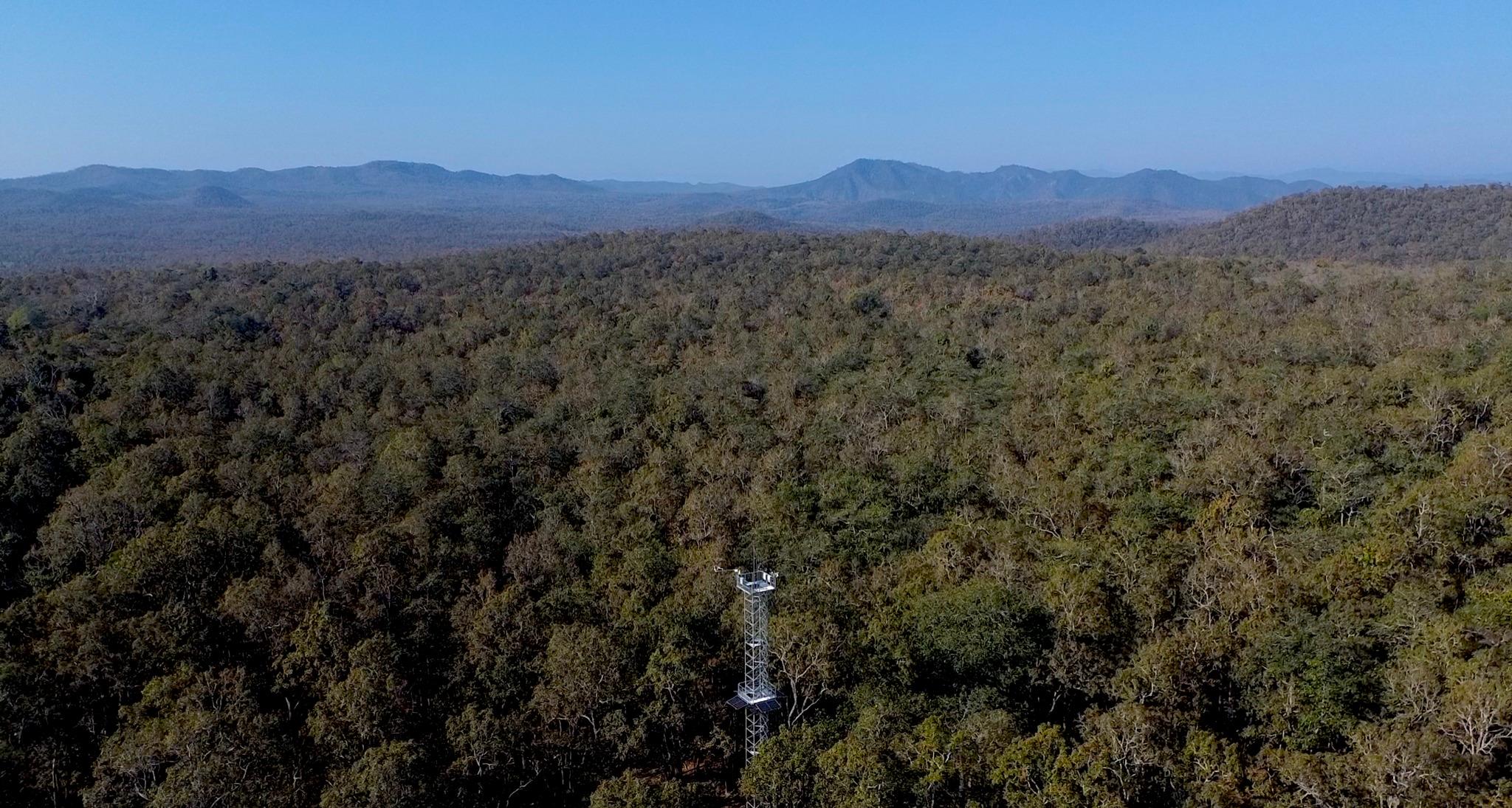
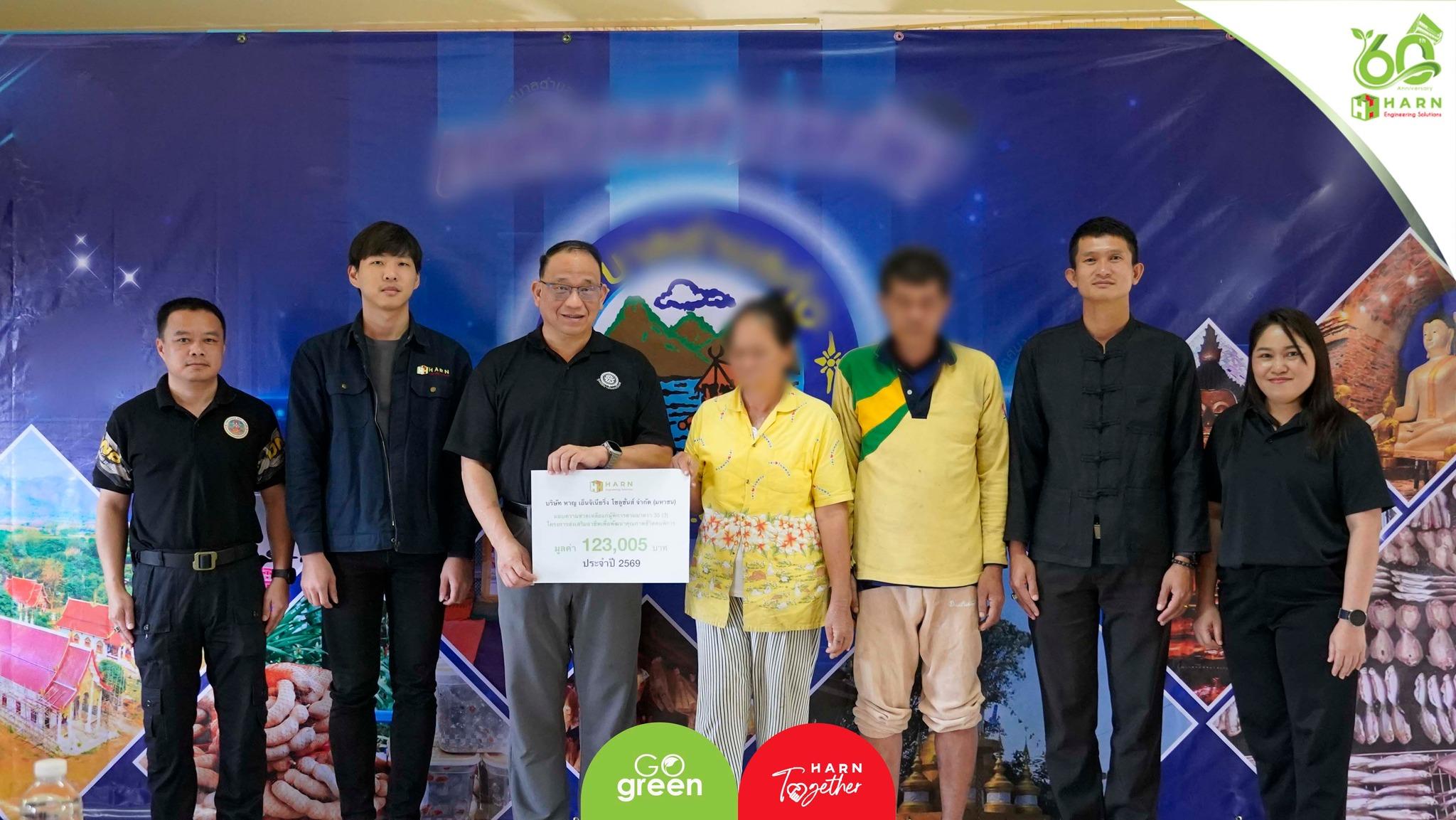
Law Violation Incidents
Law Violation Incidents
| Metric | Current Year | Previous Year | Two Years Ago |
|---|---|---|---|
| The total number of cases or incidents of significant violations of laws or regulations regarding social and human rights (Cases) | 0 | 0 | 0 |
| The total number of cases or incidents that cause significant labor disputes (Cases) | 0 | 0 | 0 |
| The total number of cases or complaints related to consumer rights violations (Cases) | 0 | 0 | 0 |
| The total number of cases or complaints related to partner rights violations (Cases) | 0 | 0 | 0 |
| The total number of cases or incidents that cause disputes with the community/society (Cases) | 0 | 0 | 0 |
| The total number of cases or incidents related to cyber security or customer data breaches (Cases) | 0 | 0 | 0 |
| The total number of cases or incidents related to safety and occupational health at work (Cases) | 0 | 0 | 0 |